 1-800-656-4211




Blog
Probiotics for Travel: Side Effects Nobody Warns You About

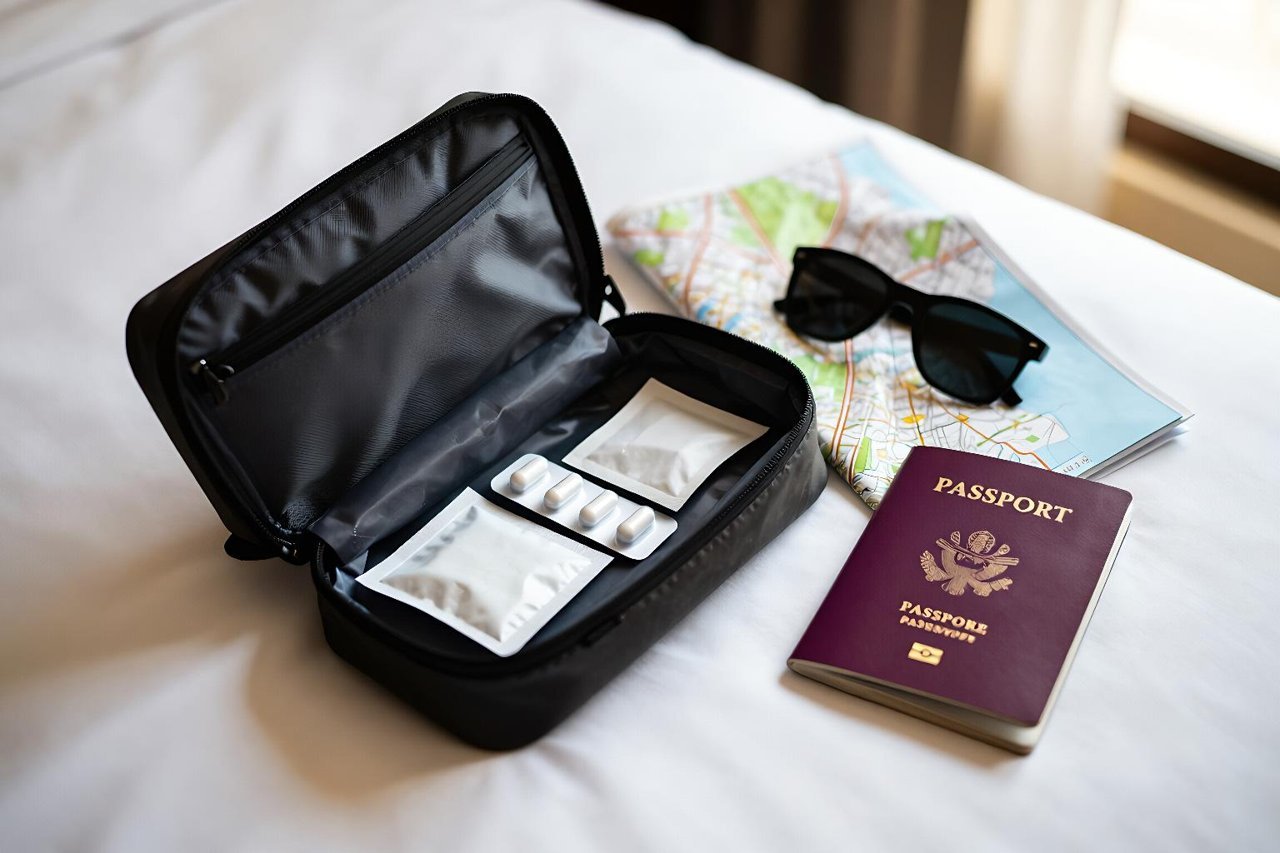
Two days into a trip, the familiar gurgle starts. You blame the airport sandwich, the tap water, or the fact that you crossed four time zones in a single flight. Then you look at the blister pack of probiotics you’ve been swallowing since Tuesday and wonder whether you’re helping your gut or quietly making things worse.
Fair question. Probiotics for travel do have side effects, and they’re usually mild, short-lived, and occasionally a good reason to stop. Here’s what to expect, which products cause the most trouble, and how to time a course so your first day in a new city isn’t spent near a bathroom.
The side effects you’re most likely to notice
Your gut already hosts trillions of bacteria. Dropping a few billion new arrivals into that crowd causes some reshuffling, and the reshuffling has symptoms.
The usual suspects, roughly in order of frequency: bloating and a stretched feeling after meals, more wind than normal, mild cramping low in the abdomen, looser stools for two to four days, and occasionally the opposite problem — a day or two of sluggishness. Some people get a dull headache in the first week.
Trial data puts mild digestive complaints somewhere under 10% of users, and placebo groups report plenty of identical symptoms. So some of what you feel on day three in Lisbon may have nothing to do with the capsules.
How long should it last?
Three to ten days is typical. If you’re still bloated and gassy three weeks in, the product isn’t suiting you. Change strains or stop rather than pushing through.
Dose and formulation matter more than the label claims
A 50-billion-CFU capsule is not automatically better than a 5-billion one, and it’s considerably more likely to leave you inflated. Powders with added inulin, FOS or other prebiotic fibres are another common culprit: those fibres ferment, and fermentation produces gas. If you’re sensitive, look for a plain single-strain product with no added fibre and work up from a half dose.
Why travel amplifies the problem
Side effects that would be a minor annoyance at home become memorable when you’re on a 12-hour bus ride or sitting through a wedding lunch.
Several things stack up. Long-haul flights dehydrate you, and a dry gut is a grumpy gut. Alcohol on arrival, unfamiliar food, disrupted sleep and a big shift in meal timing all change transit speed through your digestive tract while the probiotic is still settling in. Jet lag also causes the classic double-dose mistake: you take a capsule at what feels like morning back home, then take another at actual morning in Tokyo, eight hours later. Two doses in eight hours is a reliable way to get cramps.
Antibiotics are the other big one. If you end up taking a course for travellers’ diarrhoea, the antibiotic doesn’t distinguish between the pathogen and the Lactobacillus you paid for. Space them at least two to three hours apart, and expect more gas while both are in play.
Strain-specific issues that rarely make the leaflet
Histamine producers and headaches
Some Lactobacillus strains, including L. casei and L. reuteri, can nudge histamine levels up. If you’re histamine-sensitive, that can show up as headaches, facial flushing, a blocked nose or itchy skin within a few days. People who get migraines should read the strain list carefully before buying.
Saccharomyces boulardii and the immune-compromised
S. boulardii is a yeast with decent evidence behind it for travel-related diarrhoea, but it’s the probiotic most associated with rare invasive infections, almost entirely in people who are critically ill, have central venous lines, or are significantly immunosuppressed. If that describes you or someone you’re travelling with, get medical advice before starting.
The short-bowel and D-lactate caveat
People with short bowel syndrome or significant intestinal surgery can, in rare cases, develop D-lactic acidosis from certain probiotics. This is a niche concern but worth knowing if you have a complex digestive history.
Signs you should stop, not just tough it out
Most side effects fade. These don’t get filed under “wait and see”:
- Fever above 38°C (100.4°F), especially with abdominal pain
- Blood or mucus in your stool, or diarrhoea lasting more than two days in a hot climate
- Hives, facial swelling, or a spreading rash
- Repeated vomiting that stops you keeping fluids down
- New joint pain or unexplained fatigue alongside gut symptoms
- Any symptom that’s still getting worse after two to three weeks
And one important reframe: probiotics are not a treatment for travellers’ diarrhoea. If you’re losing fluids fast, oral rehydration salts matter far more than any capsule in your bag.
A start-before-you-fly plan that limits trouble
Begin 10 to 14 days before departure, not the morning of the flight. Take a half dose for the first three or four days, then move to the full dose. That way the bloating phase happens at home, where a bathroom is never more than ten steps away, and you know by the time you pack whether the product suits you at all.
Take it 20 to 30 minutes into a meal, with water that isn’t hot. Temperatures above about 40°C kill many strains, so tea and coffee are out.
Keep the dosing interval consistent rather than the clock time. If you normally take it at 8am, take it eight hours after your last dose once you land, even if that means 2pm local time. Your gut doesn’t know what time zone you’re in, but it does notice a double hit.
For hot, humid destinations, choose shelf-stable sachets over refrigerated capsules. Hold luggage in summer can sit in a closed cargo hold for hours well above 30°C, which is not kind to live cultures. Carry them in your hand luggage instead. Loose powder sachets are generally fine through security, though some countries now screen larger powder containers separately, so leave them in the original packaging.
Do you actually need them for this trip?
The evidence for preventing travellers’ diarrhoea is honestly mixed. Meta-analyses show a modest reduction in risk, strongest for S. boulardii and Lactobacillus rhamnosus GG, but the trials are small, use different doses, and don’t agree with each other. Probiotics are a reasonable supporting habit, not a shield. They won’t neutralise a salad washed in tap water.
If your trip is a two-week city break and your gut is fine at home, you can skip them entirely. They earn their place more on long trips, in regions where travellers’ diarrhoea is common, or when you’re prone to digestive disruption from food changes.
The rest of the kit that does more work
Side effects are easier to handle when the basics are covered. Pack oral rehydration sachets (two per travel day, more for hot climates), a 60%+ alcohol hand gel, a water purification method you’ve actually tested at home, and loperamide for emergencies only — never with a fever or bloody stool. Add a small note on your phone with the names of any medications and your probiotic strain, useful if you need a pharmacist abroad.
One last practical detail: if you’re layering probiotics with a new supplement, a malarial prophylactic or a course of antibiotics, change one thing at a time. When three new pills start on the same day and your stomach objects, you’ll have no idea which one to blame.
