 1-800-656-4211




Blog
Papaya Enzyme Supplements: Side Effects Worth Knowing Before You Chew Another Tablet

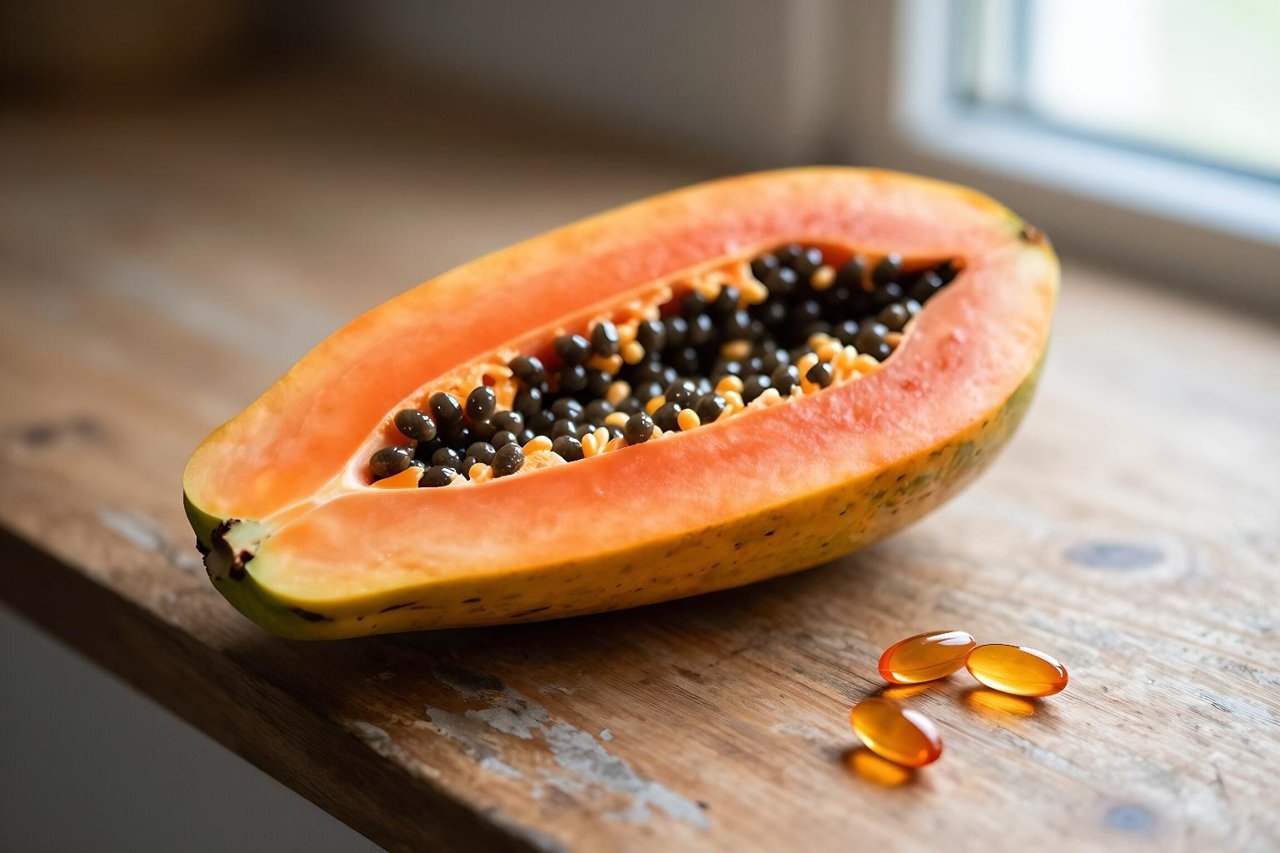
Papaya enzyme tablets are usually sold in a round plastic bottle with a picture of a sliced papaya on the front, priced at about the cost of two coffees. You chew one after a heavy meal, it tastes faintly of mint and chalk, and for most people nothing happens at all. That’s the honest starting point. Papain, the main enzyme in these products, has been in the food supply for decades as a meat tenderiser and carries the additive code E1101.
But “generally gentle” isn’t the same as “no side effects.” A small share of people get a sore mouth, an upset stomach, or something considerably more serious. Here’s what the research and the case reports actually describe, so you can judge whether the chewable is worth it.
What’s actually inside a papaya enzyme supplement
Most products contain papain extracted from the latex of unripe papaya fruit, sometimes alongside bromelain from pineapple, plus amylase, lipase or protease blends, chlorophyll for colour, and a mint or fruit flavouring. Chewable versions typically deliver somewhere between 10 and 60 mg of papain per tablet, though labels vary wildly.
That dose range matters because papain is an active protein-digesting enzyme, not an inert powder. It breaks peptide bonds, and it doesn’t stop working the moment it hits your mouth. That’s the root of several side effects below.
The mild side effects most people notice
The most common complaints are unglamorous and short-lived. Chewable papaya enzyme tablets can leave a tingling, raw or prickly feeling on the tongue, gums and inside of the cheeks, particularly if you suck on them rather than chewing quickly. Some people describe a chalky aftertaste that lingers for twenty minutes.
Swallowed in larger amounts, papain can produce:
- Nausea or a queasy feeling, usually within an hour of taking a tablet
- Stomach cramps and gurgling, especially on an empty stomach
- Loose stools or diarrhoea at higher doses or with multiple tablets
- Bloating and wind, which is ironic given what the products claim to fix
- Mouth irritation or a sore tongue from prolonged contact with chewables
These tend to scale with dose. One 20 mg chewable after dinner is a different proposition from three tablets three times a day, which some labels suggest. If you have acid reflux or a sensitive stomach, taking papaya enzymes with food rather than between meals generally reduces the queasiness.
Latex allergy is the big red flag
This is the side effect that deserves real attention. Papain comes from papaya latex, and it cross-reacts with proteins found in natural rubber latex. Roughly 1% of the general population has a latex allergy, but the figure climbs to somewhere between 5% and 17% in healthcare workers, people who’ve had multiple surgeries, and those with spina bifida.
For that group, a papaya enzyme supplement isn’t a mild digestive aid. Documented reactions include itchy hives, swelling of the lips and tongue, wheezing, and in rare cases anaphylaxis. Anyone who reacts to bananas, avocados, kiwi or chestnuts in the mouth-tingling way known as oral allergy syndrome should also be cautious, since the proteins overlap.
There’s a second population at risk: people who handle the raw powder. Papain dust is a recognised cause of occupational asthma in workers at meat-tenderising plants and in pharmaceutical manufacturing. That’s inhalation, not ingestion, but it illustrates how allergenic the enzyme can be.
Stop taking it and get medical help if you notice
- Hives, welts or widespread itching
- Swelling of the lips, tongue, throat or face
- Wheezing, chest tightness or difficulty breathing
- Dizziness, a racing heartbeat or feeling faint
- Vomiting alongside any of the above
Bleeding risk and drug interactions
Papain’s protein-cleaving action has been linked in case reports to altered clotting markers, including raised INR in people taking warfarin. The evidence is thin and mostly anecdotal, but it’s consistent enough that pharmacists flag the combination. If you take warfarin, clopidogrel, aspirin, regular NSAIDs like ibuprofen, or a high-dose fish oil supplement, adding a papaya enzyme product is a conversation to have with your prescriber first, not an impulse purchase.
Standard advice for herbal and enzyme supplements is to stop them around two weeks before scheduled surgery, largely because of this bleeding question and because anaesthetists want an accurate medication list. Tell your surgeon if you’ve been taking papain regularly.
Pregnancy, breastfeeding and children
There isn’t enough safety data to recommend papaya enzyme supplements in pregnancy. Traditional medicine has long advised pregnant women to avoid unripe papaya and papaya latex, and while a low-dose chewable is a different exposure, no well-designed trial has looked at it. The cautious answer for pregnancy, breastfeeding and young children is to skip it and treat digestive complaints another way.
Dose on the label doesn’t mean much
Papain is measured by enzyme activity, not weight. You’ll see USP units, FCC units, or milk-clotting units, and a product listing “100 mg papain” without an activity figure tells you almost nothing about potency. Two brands can print identical milligram amounts and differ tenfold in actual enzyme action.
Blends muddy things further. Many digestive formulas add betaine HCl, ox bile or pepsin, each with its own side effects: betaine HCl can burn the oesophagus and shouldn’t be used by anyone with ulcers or gastritis. Look for a product with third-party testing from USP or NSF, and check the label for papain activity in units rather than relying on the front-of-bottle claims.
What the evidence actually supports
Papaya enzymes are marketed for bloating, indigestion, inflammation and recovery after surgery. The strongest human evidence involves bromelain, not papain, and much of it comes from small studies done decades ago. Papain does have a legitimate medical use, but it’s topical: prescription ointments containing papain are used to debride wounds and burns. That’s a long way from a chewable tablet sold as a digestive aid.
Oral enzyme supplements fall under supplement regulations, which means nobody has to prove they work before they’re sold. So the practical calculation looks like this: if you have no latex sensitivity, no bleeding disorder and no anticoagulant prescription, a single chewable after a big meal is low risk and may well do nothing in either direction. If you tick any of those boxes, or you develop mouth tingling, stomach cramps or any sign of an allergic reaction, the sensible move is to stop and mention it to a pharmacist. Keep the bottle for two weeks, note down anything you notice, and let your own reaction, not the label, decide whether you buy a second one.
