 1-800-656-4211




Blog
Probiotic Capsules vs Gummies: Side Effects That Actually Differ

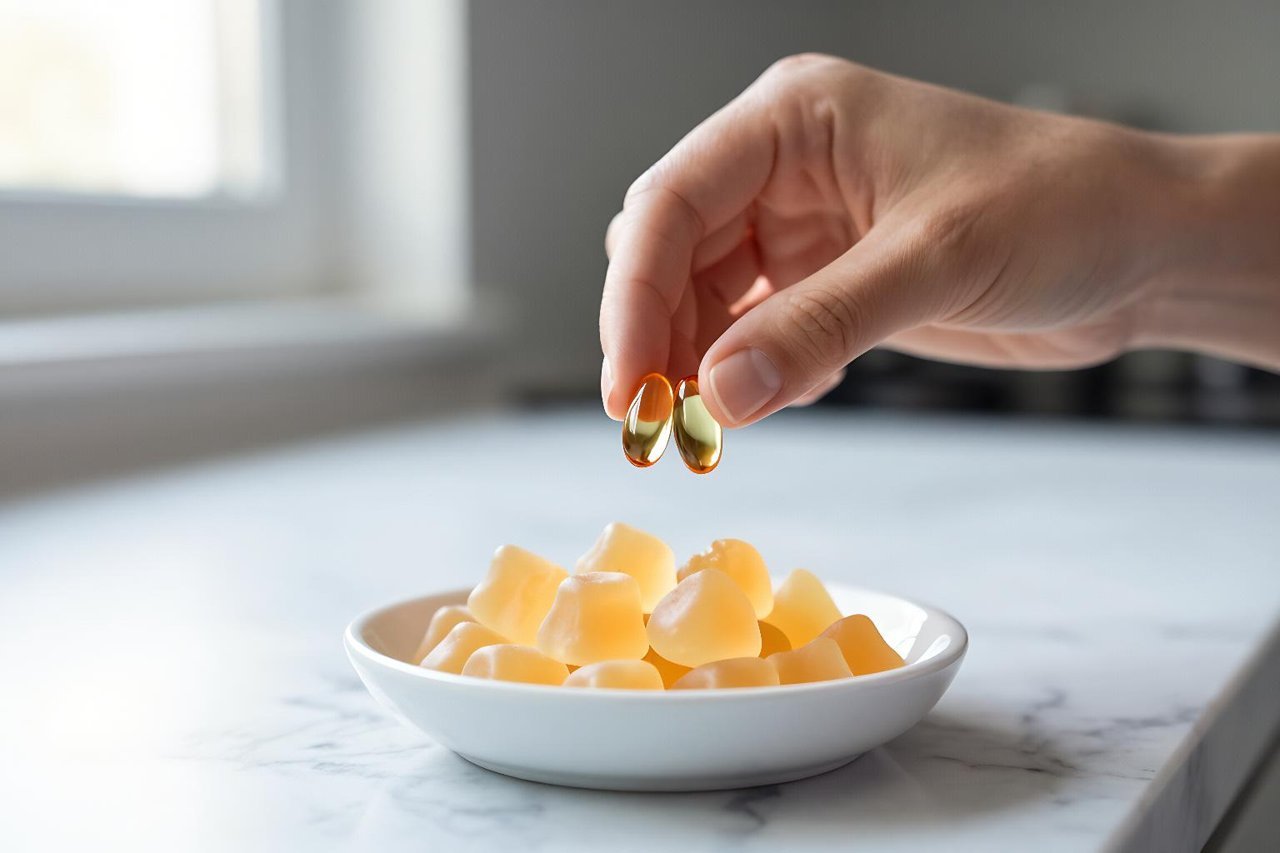
A 34-year-old with irritable bowel syndrome buys a 50 billion CFU capsule and takes it with breakfast. Her flatmate picks up a tropical-flavour gummy with two billion CFU per piece and three grams of sugar in each, and chews two after dinner. By day four, one of them is bloated enough to unbutton her jeans. The other feels fine, and also notices no change in her digestion whatsoever.
Same aisle, same category, completely different experience. Most discussions of probiotic capsules vs gummies side effects get framed as a debate about convenience. In practice, the reactions people actually complain about usually come down to what else is packed around the bacteria, not the bacteria themselves.
Two formats, two very different doses
Capsules are built to carry payload. A standard veggie or gelatin capsule holds anywhere from 5 to 50 billion CFU, plus a little cellulose or rice flour and a desiccant sachet tossed in the bottle. Gummies are built for flavour. The matrix is mostly syrup, gelling agent and citric acid, and it can only hold so much bacteria before the texture goes rubbery and shelf life collapses. Most gummies land between 1 and 5 billion CFU.
That gap cuts both ways. A high-CFU capsule is far more likely to trigger gas and cramping in the first week. A low-CFU gummy is gentler on the gut but may never reach a dose that does anything measurable, which is its own kind of side effect: three months and forty pounds spent for nothing.
Gas, bloating and the ten-day adjustment
Probiotic bloating is real and it has a mechanism. You introduce a few billion new organisms into a gut running on a different microbial balance, fermentation patterns shift, and gas follows. It usually settles within 7 to 14 days. What determines how rough those days are is the starting dose.
The bloat curve on high-strength capsules
Jumping straight to 50 billion CFU on day one is the single most common reason people give up on capsules. A gentler route is 5 to 10 billion for the first week, then step up. People with IBS, or anyone who has just finished a course of antibiotics, tend to be more sensitive and should sit at the low end for longer.
Sugar alcohols and the gummy trap
Sugar-free gummies lean on maltitol, sorbitol or xylitol to keep the calorie count down. These compounds are fermentable and they pull water into the bowel. As little as 10 to 20 grams of sorbitol gives plenty of adults loose stools and cramping. A four-gummy serving of a sugar-free product can get you a decent way toward that number, and the label will still say “digestive support” while the sweetener quietly does the opposite.
Regular sugared gummies skip the sorbitol problem and bring a different one.
What gummies do to your teeth that capsules never will
Chewable, sticky and acidic is a bad combination for enamel. A typical probiotic gummy carries 2 to 4 grams of sugar, so two gummies twice a day at 3 grams each is roughly 12 grams daily, about three teaspoons, or close to 4.4 kilograms across a year. Gummies also usually contain citric acid for tartness, and the sticky texture keeps sugar pressed against the tooth surface long after you swallow. Capsules bypass the mouth entirely, which is one small reason dentists tend to prefer them.
Ingredients that cause reactions unrelated to the bacteria
A fair share of “probiotic side effects” are actually reactions to the excipients, the stuff holding the product together. Reading the inactive ingredients list explains a lot of mystery symptoms.
- Gelatin shells and gummy bases: bovine or porcine. A problem for vegetarians, vegans and anyone avoiding pork for religious reasons. Pectin and tapioca-based gummies sidestep this.
- Artificial colours: tartrazine (E102) and sunset yellow (E110) appear in bright gummies and are linked to reactions in sensitive children.
- Titanium dioxide: used to whiten capsules and some chews. The EU banned it as a food additive in 2022 over genotoxicity concerns, though it still shows up in supplements sold elsewhere.
- Corn syrup and cane sugar: a gummy habit can add meaningful sugar to a diet already carrying too much, which is unhelpful if blood sugar regulation is a concern.
- Histamine-producing strains: some Lactobacillus casei and Lactobacillus bulgaricus strains can worsen headaches and flushing in histamine-sensitive people, in either format. L. plantarum and Bifidobacterium infantis are usually better tolerated.
Potency problems that look like side effects, or hide them
Gummies carry more water than capsules, and bacteria do not like water. CFU counts in a gummy can drop steeply over 12 months on a warm shelf, which is why some brands overfill at manufacture to compensate. If the label says “5 billion CFU at time of manufacture” rather than “at expiry,” you could be getting a fraction of that by the time you open the tub.
Capsules fare better, particularly in blister packs or bottles with a desiccant, though they are not immune. A bottle left in a car in July is a bottle of dead powder regardless of format. When a product underdelivers, you get no side effects and no benefit, and it is easy to conclude that probiotics simply do not work for you.
Who should be picky about format
Most healthy adults can take either. These groups should think harder about what they swallow:
- Immunocompromised people, anyone with a central venous catheter, and critically ill patients: live organisms carry a small but documented risk of bloodstream infection. Talk to your clinician before starting anything.
- People with short bowel syndrome: certain strains can drive D-lactate production, and this group is at risk of D-lactic acidosis.
- Children: gummies look like sweets, which makes overdose genuinely easy. Capsules at least require swallowing.
- Anyone with SIBO or severe IBS: start low, whatever the format, and keep a symptom log for two weeks.
- People managing blood sugar: sugar-free gummies bring the sorbitol problem, sugared gummies bring the sugar. Capsules avoid both.
Starting either format without a rough week
Some practical moves that reduce the odds of a bad first fortnight:
Begin at 5 to 10 billion CFU and hold there for seven days before increasing. Take the dose with a meal, since food buffers stomach acid and takes the edge off nausea. Introduce one product at a time so you can tell what caused what. If you are on antibiotics, space the probiotic two hours away from each dose. Store the bottle somewhere cool and dry, and check whether the manufacturer recommends the fridge.
Keep a simple note of bloating, gas and stool changes for two weeks. Mild symptoms that fade are normal and worth pushing through. Severe cramping, fever, bloody stools or a rash are not, and those warrant stopping and calling a doctor. Serious infection from probiotics is rare, but it is not zero.
Reading the label like someone who has been burned
Flip the bottle over. You want a CFU figure described as guaranteed through expiry, full genus and species names with strain codes such as Lactobacillus rhamnosus GG, and a third-party seal like NSF or USP. If the label says “probiotic blend, 10 billion CFU” with no strain names, you cannot match it to a single clinical trial. For gummies specifically, check sugar per piece and the type of sweetener before anything else, then look at whether the brand publishes potency data at end of shelf life. For capsules, check the capsule material if you avoid gelatin, and check the allergen line for dairy traces from the fermentation process.
A gummy that tastes like a sweet and delivers 2 billion CFU with 3 grams of sugar is not a scam, it is just a different product with different trade-offs. Buy it because you will actually take it every day, not because it sounds gentler. Consistent daily use at a sensible dose beats a strong capsule abandoned in a drawer by week two.
