 1-800-656-4211




Blog
Probiotic Foods List: Side Effects Most People Aren’t Warned About

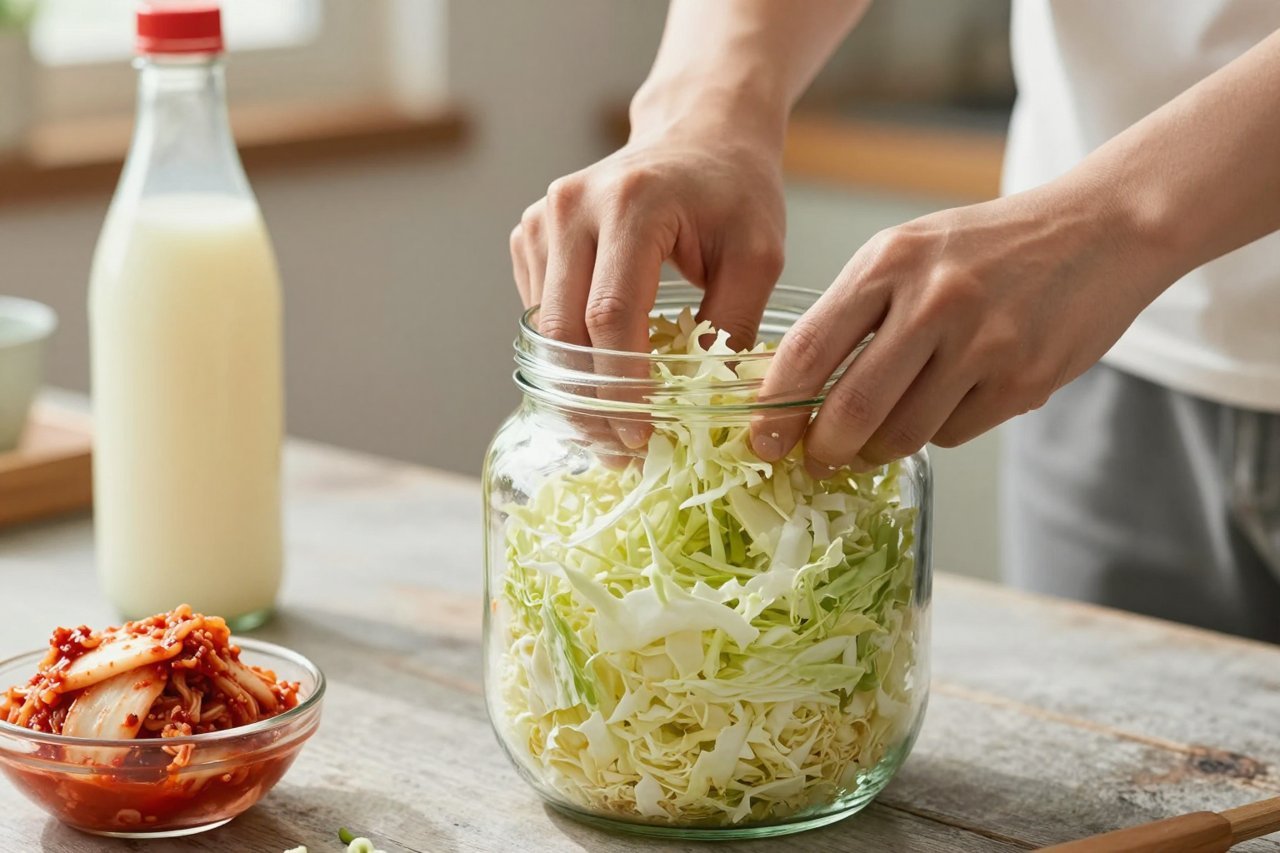
You stirred kefir into your morning smoothie, put a forkful of kimchi on your eggs, and cracked open a kombucha after dinner. Three days later your stomach is tight as a drum, you’re in the bathroom more than usual, and you’re quietly wondering whether you’ve made a mistake.
You probably haven’t. Most people who end up reading a probiotic foods list with side effects tacked onto the end are dealing with one of three things: a gut that’s adjusting, a specific fermented food that doesn’t suit their biology, or a portion size that was far too ambitious for week one.
The probiotic foods list, and what’s actually in each one
Fermented foods are not interchangeable. They carry different strains, different acid profiles, different histamine loads, and very different amounts of salt. Knowing what you’re eating makes it much easier to work out what’s upsetting you.
- Kefir is a milk ferment with a genuinely diverse culture, often 30 or more strains of bacteria plus yeasts. It’s the most potent item on most lists, which is also why it causes the most dramatic reactions.
- Live yogurt depends on the label. Look for “live and active cultures” and check that Lactobacillus strains are named. Heat-treated yogurt is a protein snack, not a ferment.
- Raw sauerkraut is cabbage, salt, and time. It must be refrigerated and unpasteurised. The shelf-stable jars in the pantry aisle have been heat-treated and contain no live cultures at all.
- Kimchi brings garlic, chilli, and often fish sauce into the mix, which matters if you react to histamine or you’re watching sodium.
- Kombucha is a tea ferment driven by yeast as much as bacteria. Commercial bottles can hold up to about 0.5% alcohol.
- Unpasteurised miso is a soybean paste. Add it to warm liquid, not boiling, or you kill what you paid for.
- Tempeh is a mould-fermented soybean cake, high in protein and unusually easy on the gut for many people.
- Aged cheeses such as gouda, cheddar, and Swiss carry live cultures, along with a hefty dose of tyramine.
- Brine-fermented pickles and olives count if they’re fermented in salt water rather than packed in vinegar. Vinegar-pickled cucumbers are not a probiotic food.
The side effects people actually report
Gas, bloating, and a rumbling gut in the first two weeks
This is the common one, and it has a simple explanation. You’ve just delivered a few billion new bacteria into your colon, and they immediately start fermenting whatever fibre and sugar reaches them. The by-products are gas and short-chain fatty acids. Your gut notices.
Expect the worst of it between day two and day seven. Most people find the bloating settles within two to four weeks if they keep the dose steady rather than escalating. If it’s getting worse in week three instead of better, that’s a signal to stop and reassess rather than push through.
Histamine reactions that look suspiciously like allergies
Sauerkraut, kimchi, kombucha, kefir, and aged cheese are all high in histamine or trigger its release. If you’re among the people whose diamine oxidase enzyme runs a bit low, a normal portion can produce flushing across the cheeks, a throbbing headache, a runny nose, itchy skin, or hives within an hour of eating.
This catches people out because it feels nothing like a stomach problem. The fix is usually to switch to freshly made, low-histamine options. A spoonful of yogurt fermented at home and eaten straight away is a very different proposition from a three-month-old jar of kraut.
Dairy trouble, even if you thought you were fine
Fermentation reduces lactose, but it doesn’t remove it. A cup of kefir still carries roughly 9 to 12 grams of lactose, and yogurt sits in a similar range. If you’ve been avoiding milk for years, a sudden 250ml glass of kefir can absolutely produce cramping and loose stools. Start with 60ml and see how you go.
When the fermentation happens in the wrong place
Small intestinal bacterial overgrowth, or SIBO, is the scenario worth knowing about. If bacteria have colonised your small intestine, adding more fermentable food and more bacteria can produce bloating within 30 to 60 minutes of eating. That timing is the giveaway. Gas that arrives long after a meal points to the colon. Gas that arrives while you’re still at the table points upstream.
People with SIBO often do better pausing high-FODMAP ferments, working with a practitioner on the underlying overgrowth, and reintroducing slowly later.
The extras bundled in: salt, alcohol, and tyramine
A cup of sauerkraut can carry 900 to 1,500mg of sodium. Kimchi is often not far behind. That matters if you have blood pressure concerns. On the medication side, tyramine in aged cheese and fermented soy is a genuine issue for anyone taking a monoamine oxidase inhibitor. And unpasteurised ferments are not appropriate for people who are immunocompromised, in hospital, or preparing food for an infant.
How to start without a rough week
Most bad reactions trace back to speed rather than the food itself. A gentler approach:
- Pick one ferment and one only. Not four.
- Start with a single tablespoon of sauerkraut or 60ml of kefir, taken with a meal rather than on an empty stomach.
- Hold that dose for three to five days before increasing. If nothing happens, double it.
- Keep a three-line note each day: what you ate, how much, and how your gut felt six hours later.
- If histamine symptoms show up, switch to a freshly made, lower-histamine ferment rather than abandoning ferments altogether.
Signs that it isn’t a normal adjustment
Mild gas and a bit of looseness in the first week are ordinary. These are not: blood in your stool, fever, severe abdominal pain, a rash or hives that spreads, bloating that never resolves, or a headache with brain fog that repeats every time you eat a particular ferment. Stop the food and speak to a doctor. In rare cases, particularly in critically ill or hospitalised patients, live cultures have caused infections, which is why medical guidance matters if your immune system is compromised.
Giving a new food a fair trial
Two weeks is the right testing window. Long enough for the adjustment gas to pass, short enough that you don’t spend a month feeling awful out of stubbornness. Eat the food at the same time each day, keep everything else in your diet roughly constant, and judge it on how you feel on day twelve rather than day two.
If week two is better than week one, keep going and nudge the portion up. If week two is worse, drop the food entirely for a fortnight, let things settle, then try a different item from the list, ideally one from a different fermentation family. Someone who reacts badly to kefir may be perfectly happy with tempeh, and someone who bloats on sauerkraut often sails through a spoon of miso in soup. The list is a menu, not a prescription, and your gut gets a vote.
