 1-800-656-4211




Blog
Best Fiber Supplement for Daily Use: The Side Effects Nobody Puts on the Label

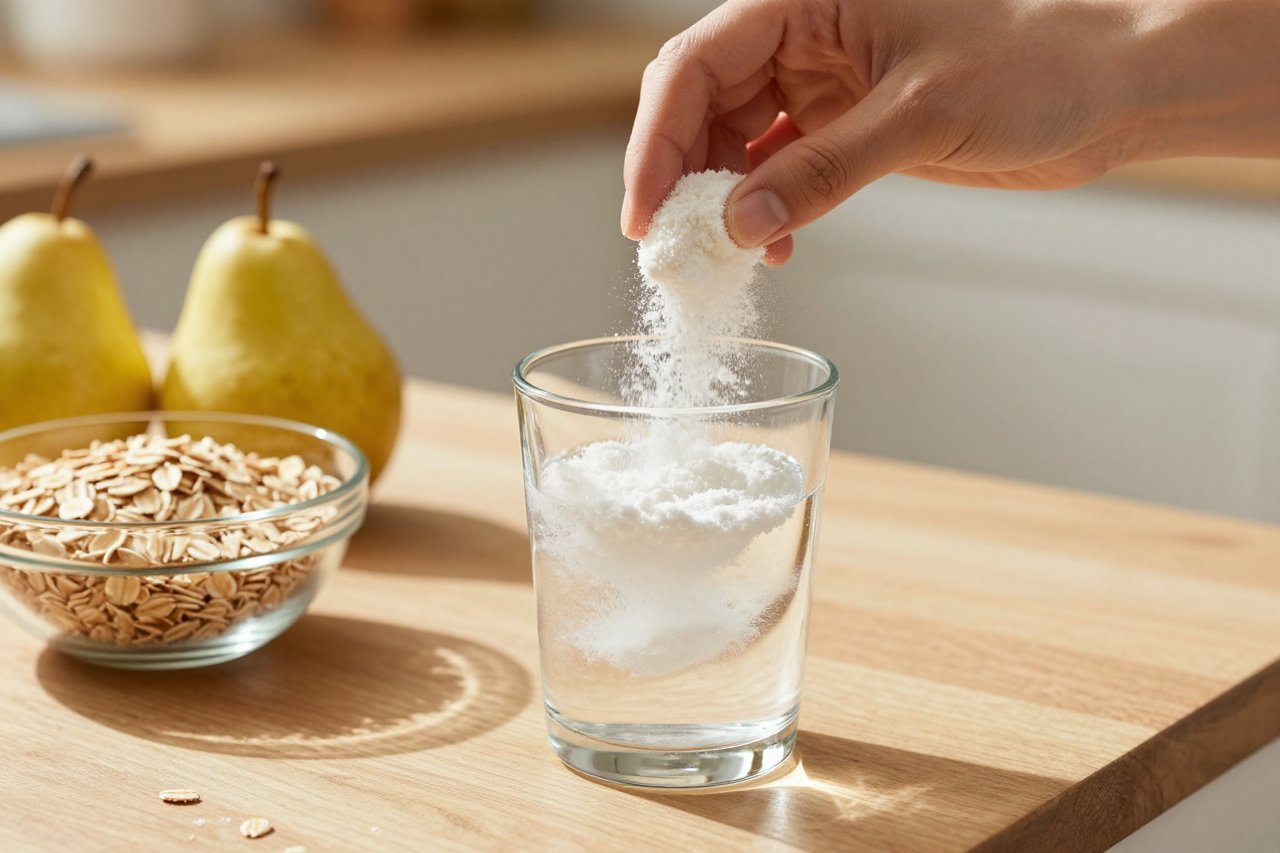
Roughly one in twenty adults gets the recommended 25–38 grams of fiber a day. The rest of us look at that number, buy a tub of powder, take a heaped spoonful on an empty stomach, and spend the next evening regretting it. Then the tub goes to the back of the cupboard.
Most fiber supplement side effects aren’t mysterious. They’re predictable, dose-dependent, and almost entirely avoidable. What follows is a practical comparison of the common forms, an honest look at what each one does to your gut in the first two weeks, and the specific things that separate people who take a fiber supplement happily for years from people who quit after four days.
There is no single best fiber supplement, only a best fit
Fiber isn’t one substance. It’s a category that includes viscous gels, coarse brans, and fermentable powders that gut bacteria treat as dinner. A supplement that solves constipation can make bloating worse. One that lowers cholesterol may do nothing for your bowel habits.
Three broad jobs, three broad tools:
- Bulking (adds mass and moisture to stool): psyllium, methylcellulose, calcium polycarbophil.
- Viscous soluble fiber (slows digestion, binds bile acids, feeds bacteria gently): psyllium, beta-glucan, PHGG.
- Fermentable prebiotic fiber (feeds specific bacteria, produces gas): inulin, chicory root, resistant starch.
Daily use usually means twelve months, not twelve days, so the deciding factor is tolerability. A slightly less powerful fiber you actually take beats a superior one that gives you cramps at 10 a.m. in a meeting.
The main contenders and their reputations
Psyllium husk
The most studied option by a wide margin. A typical 5-gram serving delivers around 4 grams of soluble fiber, and trials show LDL cholesterol drops of roughly 5–10% at 10 grams daily. It gels in water, which is why it works for both constipation and loose stools. It’s also the form most likely to cause bloating if you overdo it, and the one with the strictest water requirement.
Methylcellulose and calcium polycarbophil
Synthetic bulking agents. They don’t ferment, so gas is minimal. Less effective for cholesterol, decent for regularity, and a reasonable pick for people with sensitive guts who can’t tolerate psyllium’s gel texture.
Partially hydrolyzed guar gum (PHGG)
The quiet overachiever. PHGG ferments slowly enough that most people get the prebiotic benefit without the balloon-animal feeling. Studies in IBS patients show good tolerance at 5 grams daily. It dissolves clear and has almost no taste, which matters if you’re mixing it into yogurt or coffee.
Inulin and chicory root
Cheap, effective at feeding bifidobacteria, and the number one cause of fiber supplement side effects in my experience. A 2020 review found doses above 10 grams frequently trigger bloating and flatulence. Start at 2 grams, not the 5-gram scoop in the tub.
Wheat dextrin
Dissolves completely, tastes like nothing, ferments slowly. Good for people who hate thick drinks. Not suitable for coeliac disease or wheat allergy, though the gluten is largely removed.
Fiber supplement side effects: what’s normal, what isn’t
Gas and bloating
Expect it in days two through seven. Gut bacteria need roughly one to two weeks to shift their populations in response to a new substrate. Fermentable fibers produce the most gas; psyllium produces some; methylcellulose produces almost none. If you’re still doubled over at week four, the dose is too high or the fiber is wrong for you.
The constipation paradox
Fiber without fluid can make constipation worse. Psyllium absorbs many times its weight in water, and if that water isn’t available in your colon, it draws it from… well, from where it’s needed. Every 5-gram dose needs at least 240 ml of water, and more on hot days or after exercise. This is the single most common reason a fiber supplement backfires.
Choking and swallowing
Dry psyllium expands fast. The FDA has flagged choking risk with psyllium-containing products, and it’s a real hazard for people with swallowing difficulties, those taking it dry, or anyone who stirs it into a thick paste and chases it with a sip. Always mix into a full glass, drink it promptly, and follow with another glass.
Medication interference
Viscous fibers can physically trap drugs in the gut. Levothyroxine absorption drops noticeably when taken with psyllium. The same applies to warfarin, lithium, digoxin, carbamazepine, and iron tablets. Leave a two-hour gap on either side of any daily medication, and four hours for thyroid hormone.
Allergies and FODMAP problems
Inulin and chicory are high-FODMAP. If you have IBS with a bloating-dominant pattern, they can trigger a flare that lasts days. Psyllium is generally the safer bet for IBS — trials show better tolerance than bran — but start at 2.5 grams, not 5.
How to start without losing a week
A ramp schedule that actually works:
- Week 1: half a serving, once daily, with a meal and a full glass of water.
- Week 2: half a serving twice daily, or a full serving once daily if week one was uneventful.
- Week 3–4: full serving, adjusted to what your gut tolerates.
Take it with food. Fiber on an empty stomach moves through faster and causes more cramping. If gas becomes socially inconvenient, cut back for three days and resume at the lower dose — don’t push through.
When to stop and speak to a doctor
Most side effects are discomfort. A few aren’t. Seek advice if you get severe abdominal pain, a hard distended abdomen, vomiting, or an inability to pass stool or gas — particularly if you have a history of bowel obstruction, diverticulitis, or abdominal surgery. Unexplained weight loss, blood in stool, or a sudden change in bowel habits lasting more than three weeks needs investigation, not a supplement.
People with active SIBO or a recent gut surgery should generally avoid fermentable fibers until cleared. Pregnancy and breastfeeding aren’t contraindications to psyllium, but check with your clinician about any powdered product, since some contain herbal additives.
Reading the label matters more than the marketing
Two products can both say “psyllium husk” and behave completely differently. Look for:
- Grams of fiber per serving, not total powder weight. Some tubs are 60% filler.
- Third-party testing for heavy metals — psyllium has had documented lead contamination in some batches over the years.
- Added sweeteners and flavours. Sugar alcohols like sorbitol and maltitol cause diarrhoea at surprisingly low doses.
- Prop 65 warnings on US labels, which are worth reading rather than ignoring.
The two habits that decide whether it works
Take it at the same time every day, anchored to something you already do — the coffee you make at 7 a.m., the lunch you eat at 1 p.m. Consistency is what lets your gut microbiome adapt; sporadic dosing keeps restarting the adjustment period, which is why weekend-only users report the most gas.
And drink more water than feels necessary. Aim for an extra 500 ml on top of your normal intake, spread across the day rather than gulped around the dose. Psyllium taken with plenty of fluid softens stool within 12 to 72 hours. Taken with too little, it does the opposite. Same powder, same spoon, two completely different outcomes — which is really the whole story of fiber supplements in a sentence.
