 1-800-656-4211




Blog
Inulin Fiber Benefits and Side Effects: What 5 to 10 Grams a Day Really Does

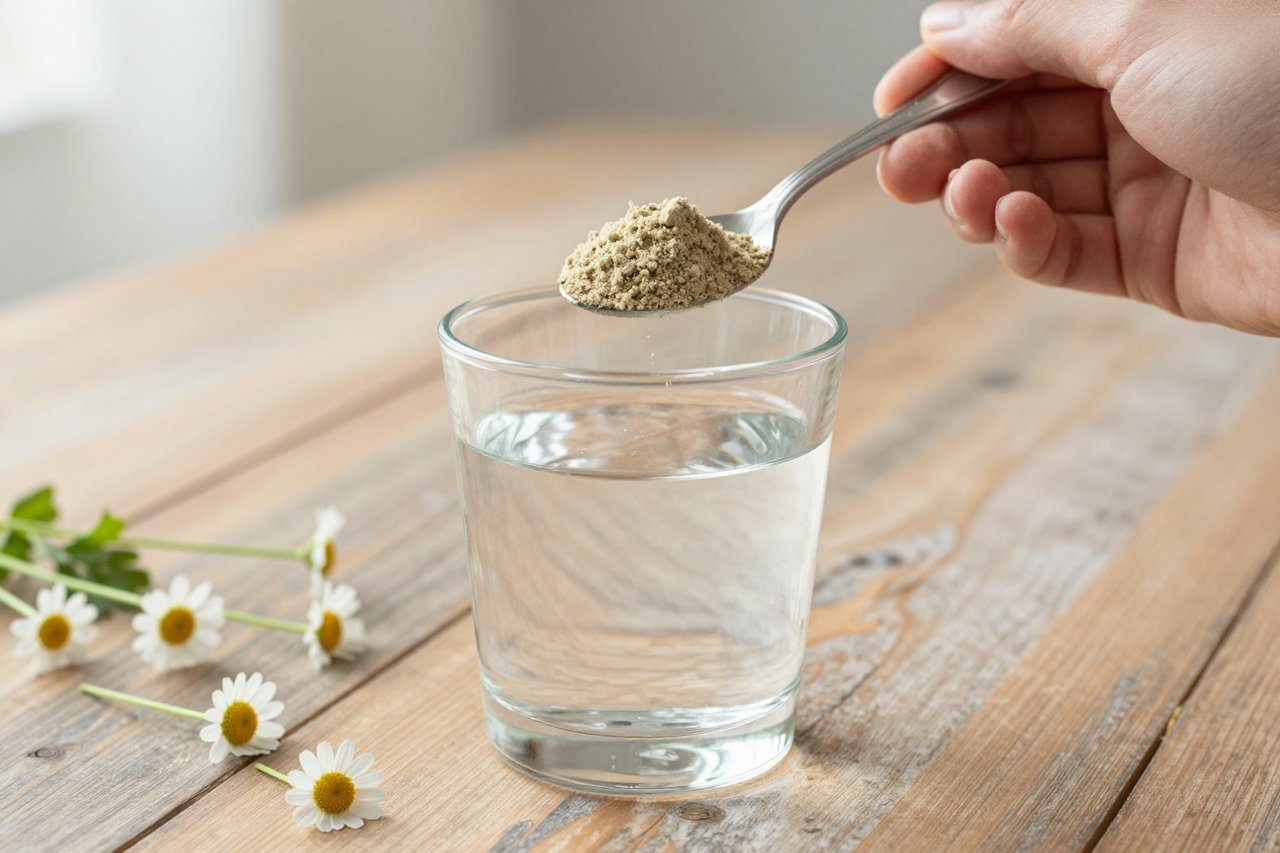
Two teaspoons of chicory root powder stirred into a morning coffee sounds harmless. For about one in three people it turns into four hours of abdominal swelling and gas that could clear a bus. The same fibre that feeds the bacteria you want also feeds the ones that produce hydrogen and methane, and most supplement labels leave that part out.
Inulin is a chain of fructose molecules joined by bonds your small intestine has no enzyme to break. It travels to the colon intact, where bacteria ferment it. That is the whole mechanism behind both the inulin fiber benefits and the side effects. One process, two outcomes, and the difference between them is mostly dose and your own microbiome.
Chain length changes everything
Chicory root inulin, which is what most tubs and protein bars use, is short-chain: roughly 2 to 10 fructose units. Agave and dahlia versions run 10 to 60 units and ferment more slowly, further down the colon. Slow fermentation generally means less gas at the same gram dose, which is why people who bloat badly on chicory sometimes do fine on a longer-chain product.
Worth knowing: many products labelled inulin are actually oligofructose or FOS blends. Those are shorter still, and they ferment faster. If a label lists “chicory root extract” or “fructooligosaccharides,” expect a livelier gut than the word inulin suggests.
Which inulin fiber benefits actually hold up
Clinical trials mostly use 5 to 20 grams a day, which is far more than most people get from food. Here is where the evidence is strongest.
It feeds bifidobacteria selectively
Around 5 grams a day for two weeks reliably raises Bifidobacterium counts in most trials, often by a full order of magnitude, while crowding out some less friendly strains. This is the prebiotic effect, and it is the best-documented benefit inulin has. Whether that bacterial shift translates into fewer colds or better mood is still an open question; the measurable change is in the colony counts.
It softens stools and improves regularity
At 3 to 8 grams a day, inulin pulls water into the colon and adds bacterial mass. Stool frequency goes up and transit time comes down in constipated adults. It is gentler than psyllium for some people and considerably harsher for others, which brings us to the next section.
It nudges calcium absorption upward
This one gets overlooked. Trials in adolescents and postmenopausal women found 8 to 20 percent better calcium absorption with 8 to 15 grams of inulin or oligofructose daily, likely because fermentation acids acidify the colon and improve mineral uptake there. Magnesium shows a similar, smaller pattern.
It blunts post-meal glucose a little
Adding 10 grams of inulin to a carbohydrate-heavy meal produces a modestly lower blood glucose curve. The effect is small in healthy people and more noticeable in type 2 diabetes and insulin resistance. It is not a substitute for fibre-rich food or medication, and it is not the weight-loss tool that some marketing implies. Satiety studies are mixed at best.
The side effects, ranked by how often they happen
Gas and bloating
This is the main event. Fermentation produces gas, and short-chain inulin ferments fast. Expect visible distension within 30 to 90 minutes of a dose your gut isn’t used to. The good news is that the microbiome adapts: most people who start low and build slowly report symptoms easing within one to two weeks.
Cramping and loose stools
Above roughly 20 grams in a single day, inulin starts acting osmotically as well as fermentatively. You get cramping, then urgency, then diarrhoea. Single large doses are far more provoking than the same total split across meals, so 10 grams at once is worse than 5 grams twice.
It is a FODMAP, which matters if you have IBS
Inulin is a fructan, and fructans are among the most commonly reported triggers in IBS research. If you bloat badly after garlic, onions, or leeks, you are likely a fructan responder and a chicory supplement will probably treat you the same way. People with SIBO often react similarly. The low-FODMAP elimination phase specifically restricts this class of carbohydrate, so a daily inulin supplement contradicts the diet.
Rare allergy
Chicory sits in the Asteraceae family alongside ragweed, sunflower, and marigold. Documented reactions exist, including contact dermatitis in people handling chicory and rare reports of allergic response to inulin. If you react to those plants, approach it carefully.
Practical dose numbers
- 0 to 3 grams: well tolerated by nearly everyone, but too low for a meaningful prebiotic effect.
- 5 to 10 grams: the sweet spot for bifidobacteria and regularity, assuming a gradual ramp.
- 10 to 15 grams: where calcium and glucose findings come from; many people manage this after two to three weeks of adaptation.
- Above 20 grams: symptom rates climb sharply. Little added benefit for most people.
Food sources, for context
Dried chicory root is roughly 70 percent inulin by weight, which is why it dominates the supplement aisle. Food amounts look like this per 100 grams fresh:
- Jerusalem artichoke: 16 to 20 g (the nickname “fartichoke” is earned)
- Garlic: 9 to 16 g
- Leek: 3 to 10 g
- Onion: 2 to 6 g
- Wheat and barley: 1 to 4 g
- Slightly green banana: under 1 g
A serving of onion and garlic in a stew delivers maybe 1 to 2 grams of inulin. That is a realistic daily intake, and it is also why people who suddenly add a 10-gram supplement on top of an unchanged diet notice it.
A four-week ramp that most people tolerate
Week one: 2 to 3 grams, once a day, with your largest meal. Dinner works well because you are unlikely to be in a meeting an hour later. Week two: keep the evening dose and add 2 to 3 grams at breakfast. Week three: hold steady and judge, giving it at least five days before changing anything. Week four: if you want the prebiotic effect, push toward 8 to 10 grams total, split in two.
Drink more water than usual. Check what else you are already consuming, because a protein bar with 9 grams of chicory root fibre plus a supplement plus a bowl of onion soup stacks quickly. If bloating persists past two weeks or is severe, halve the dose and rebuild more slowly, or switch to a longer-chain agave inulin. Some people simply never adapt, and that is a legitimate answer rather than a failure.
One last label habit: fibre claims on packaged food are often satisfied with the cheapest chicory root product available, and the gram count can be substantial. Read the ingredients panel before you assume the “gut-friendly” bar is a small addition to your day.
