 1-800-656-4211




Blog
Psyllium Husk Benefits and Side Effects: What 5 Grams a Day Actually Does

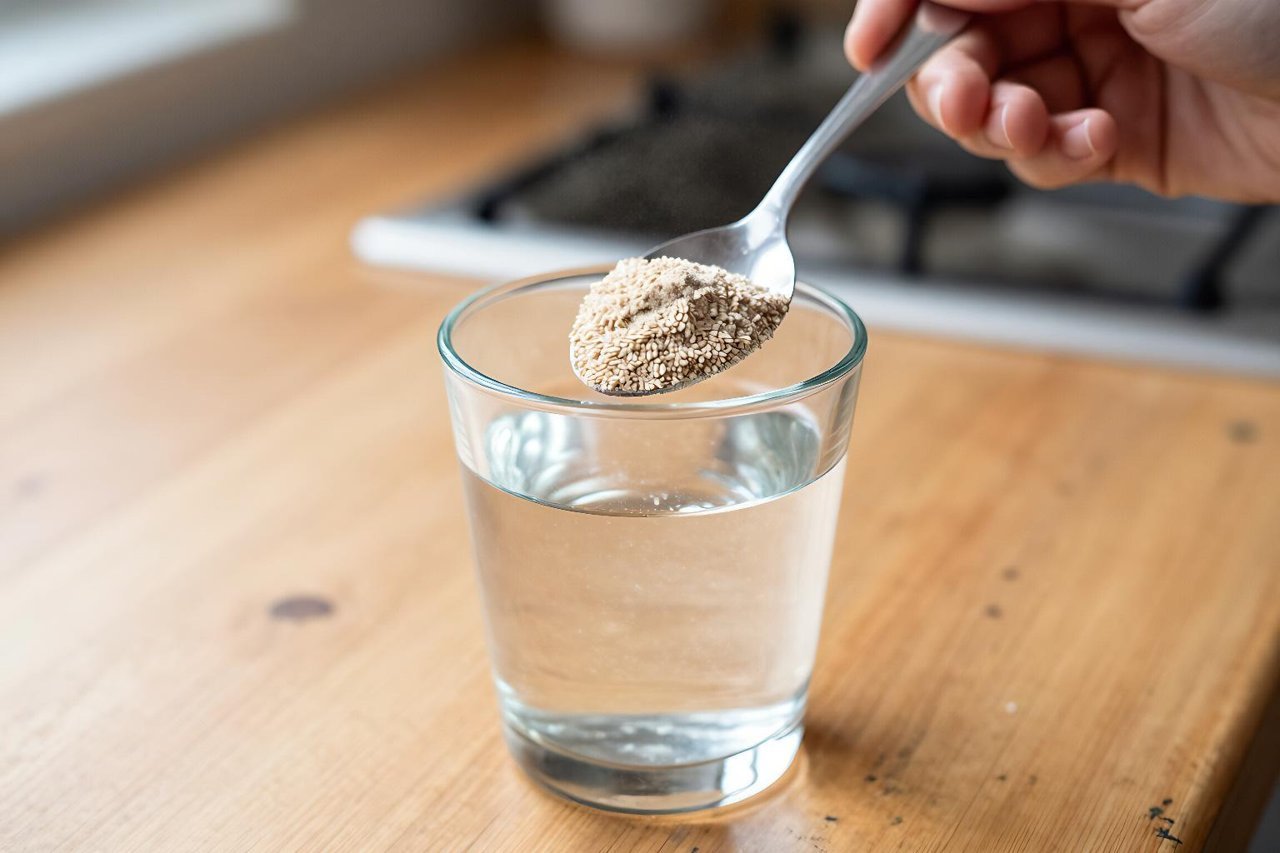
A teaspoon of psyllium husk stirred into a glass of water turns into something close to wallpaper paste in under a minute. That unglamorous transformation is exactly why the stuff works, and also why it can go wrong if you use it carelessly.
A few facts worth anchoring on before anything else. Most commercial psyllium comes from Plantago ovata, a plant grown largely in Gujarat, India. The husk is the seed coat, and roughly 70% of it is soluble fibre, mostly a gel-forming polysaccharide called arabinoxylan. One level teaspoon holds about 5g of husk, which delivers around 4g of fibre. A typical serving is 5 to 10g, once or twice a day.
Unlike wheat bran, which is mostly insoluble and passes through you like grit, psyllium soaks up water and forms a gel that behaves like a soft sponge moving along the bowel. That single mechanical property explains most of its benefits and nearly all of its side effects.
The psyllium husk benefits that actually hold up
It makes constipation dull and predictable
This is the best-evidenced use. In trials of adults with chronic constipation, 5 to 10g twice daily increases stool frequency and improves consistency within about three days. It isn’t a stimulant, so nothing cramps. It simply gives a sluggish bowel more water and bulk to work with. For people whose constipation comes from a low-fibre diet, iron supplements or pregnancy, it’s often the first thing a GP suggests.
It pulls LDL cholesterol down a notch
Meta-analyses of randomised trials put psyllium at roughly a 5 to 10% reduction in LDL cholesterol at intakes of around 10g a day, with slightly bigger effects in people who already have high cholesterol. The mechanism is bile acid sequestration: your liver spends cholesterol making bile acids, psyllium traps them, and the liver pulls more LDL from the blood to replace them. It’s a modest effect, not a statin, but 10g daily alongside a decent diet is a reasonable lever.
It softens post-meal blood sugar spikes
Taken with or just before a meal, the gel slows gastric emptying and blunts the glucose peak. Studies in people with type 2 diabetes have reported meaningful drops in postprandial glucose and, over 8 weeks, small improvements in HbA1c. Timing matters: psyllium taken two hours after eating does very little.
It takes the edge off hunger
Psyllium isn’t a fat burner, and anyone selling it as one is overselling. What it does is add volume and delay emptying, which in some studies reduces how much people eat at the next meal by 20 to 30%. A 2020 trial in overweight adults found 10g before meals produced slightly better weight loss than placebo over 12 weeks. Slightly is the operative word.
It helps with IBS and diverticular disease
For irritable bowel syndrome with constipation, psyllium is one of the few fibres with decent trial support, and it’s low-FODMAP, so it suits people following that protocol. In diverticular disease it’s long been used to keep stools soft and reduce pressure in the colon. If your IBS swings towards diarrhoea, go carefully, because bulking fibre can make urgency worse.
Psyllium husk side effects: what to expect and what to watch for
Nothing here should put you off, but a bit of foresight saves a bad afternoon.
- Bloating, gas and cramping, especially in the first week or if you start at a full dose
- Choking or oesophageal blockage if the powder is taken dry or with too little liquid
- Reduced absorption of some medicines taken at the same time
- Dehydration or worsened constipation if you don’t drink enough water alongside it
- Rare allergic reactions, including asthma-like symptoms in people sensitised to psyllium dust
The bloating is usually a dosing problem
Psyllium ferments slowly, so it produces less gas than inulin or chicory root, but it still ferments. Starting at 10g a day on day one is the classic mistake. Begin with 2.5 to 3g, hold it for four or five days, then add another small scoop each week until you reach your target.
The choking hazard is genuinely real
There are case reports of psyllium blocking the oesophagus when swallowed dry, and at least one death. The rule is simple: one teaspoon needs at least 250ml of water, stirred and drunk immediately before it sets, followed by another half glass. Never take it at bedtime.
It can sweep medication along with it
The gel doesn’t distinguish between bile acids and your thyroid tablet. Psyllium can reduce absorption of levothyroxine, lithium, carbamazepine, digoxin and some diabetes drugs. Leave at least two hours between psyllium and any medication, and longer for thyroid hormone, where four hours is the safer gap.
How to take it without regretting it
Mix one teaspoon into 250 to 300ml of water, juice or milk, stir hard, and drink it before it thickens. Some people prefer to blend it into a smoothie or stir it into yoghurt, which is fine as long as you drink water alongside. Take it 15 to 30 minutes before a meal if blood sugar or appetite is your goal, or at any consistent time if you’re using it for regularity.
Expect results in 12 to 72 hours, not 12 minutes. Give it a full week before judging. And if you take it twice a day, don’t stack both doses at the same meal.
Reading the label saves you money
Whole husk and powdered husk are the same product, so don’t pay extra for “ultra-fine” unless texture bothers you. What to check is purity. Look for 100% psyllium husk with no added sugar, maltodextrin or flavourings, and flavour it yourself with a squeeze of lemon. Also check the fibre figure per serve: a product offering 3g of fibre per 5g scoop is mostly filler. Whole husk costs less per gram and works identically.
Store it sealed and dry. Psyllium absorbs moisture from the air and can clump into bricks within weeks in a humid kitchen.
Who should leave psyllium on the shelf
Skip it, or ask your doctor first, if you have any narrowing or obstruction of the bowel, a history of oesophageal stricture, or difficulty swallowing. It’s not appropriate during a bout of active diverticulitis or an acute IBS flare. People with phenylketonuria should check flavourings, and anyone with a known allergy to psyllium dust should handle it with care, since airborne husk powder has triggered reactions in manufacturing workers.
For everyone else, psyllium is about as low-risk as supplements get, provided you drink the water, start small, and keep it away from your other pills by a couple of hours. It won’t transform your health, but it does one job reliably, and it does it for pennies a day.
