 1-800-656-4211




Blog
Cod Liver Oil Benefits: Side Effects, Safe Doses, and Who Should Skip It

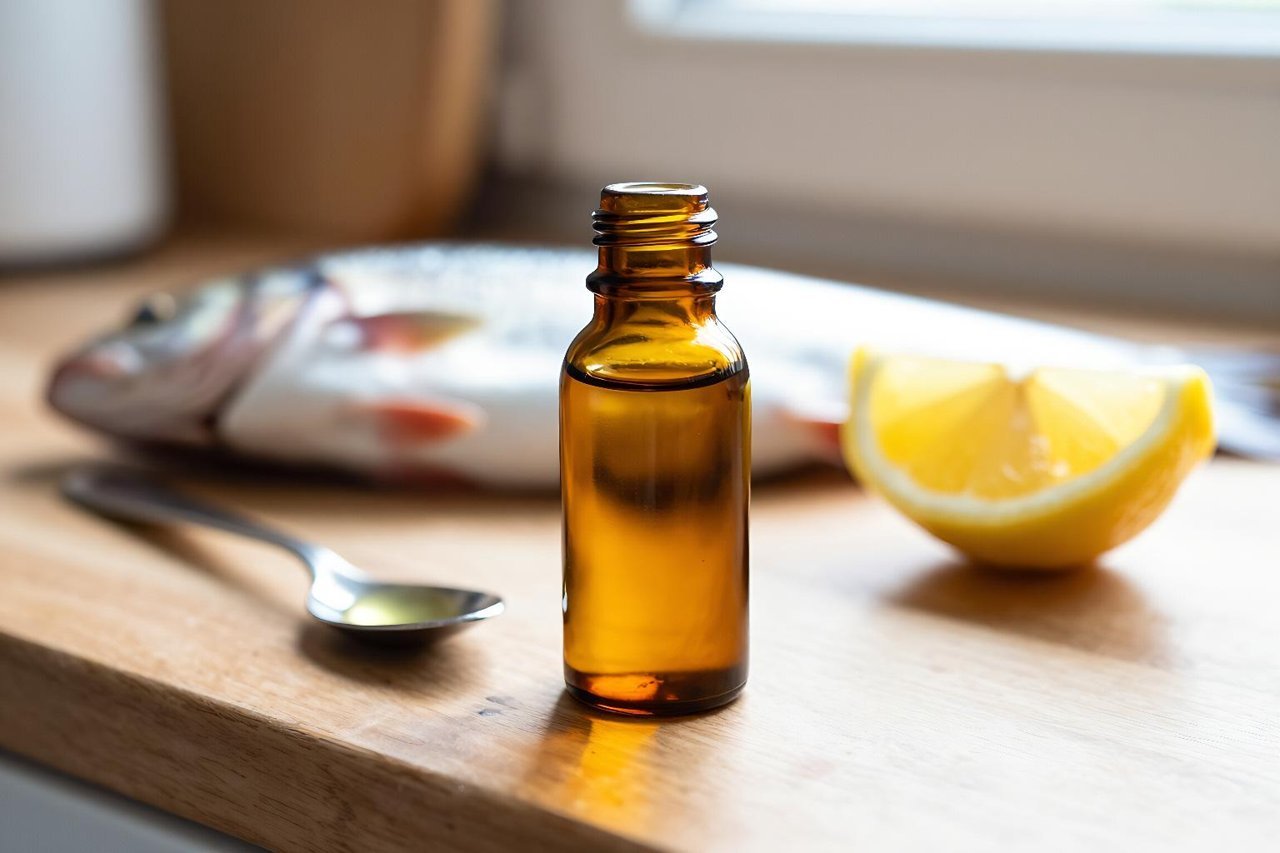
My grandmother kept a bottle of cod liver oil in the fridge next to the milk and handed out a spoonful every morning from October to March. Nobody enjoyed it. She was, it turns out, onto something. Cod liver oil is one of the few old-fashioned remedies that has survived contact with modern research, though the benefits and the side effects usually get flattened into one cheerful label on the bottle.
What follows is a straight account of what the evidence supports, what can go wrong, and where the line sits between a useful daily habit and a problem you’d rather not have.
What you’re actually swallowing
Cod liver oil is pressed from the livers of cod caught in cold North Atlantic water. Because it comes from the liver rather than the flesh, it carries fat-soluble vitamins that a standard fish oil capsule doesn’t: vitamin A, vitamin D, and the omega-3 fatty acids EPA and DHA.
A typical teaspoon (5 ml) of a conventional, non-fortified product looks roughly like this:
- Vitamin A: 4,000 to 5,000 IU, as retinol
- Vitamin D: 400 to 500 IU
- Omega-3 (EPA + DHA): 800 to 1,000 mg
Those three numbers are the whole story in miniature. The omega-3 dose is respectable. The vitamin A dose is already 40 to 50 percent of what a healthy adult should take in a day, and that ceiling is what separates cod liver oil from the fish oil you can take by the handful.
Cod liver oil benefits worth knowing about
Stiff joints and morning pain
A small 2008 trial followed 43 people with rheumatoid arthritis who took 10 ml of cod liver oil daily for nine months. Compared with the control group, they reported less morning stiffness and were able to cut back on anti-inflammatory painkillers. It was a modest effect in a modest study, but it lines up with the broader omega-3 literature on joint inflammation.
Triglycerides and heart markers
Omega-3 fats at 2 to 4 grams a day can lower triglycerides by 20 to 30 percent. Here’s the catch: reaching that dose with cod liver oil means three or four teaspoons daily and somewhere north of 15,000 IU of vitamin A. That’s the wrong tool for the job. Fish oil or algae oil is the sensible route if triglycerides are your actual target.
Vitamin D through the dark months
UK health guidance recommends everyone take 400 IU of vitamin D daily through autumn and winter, because the sun at northern latitudes doesn’t generate it in skin from roughly October to March. A teaspoon of cod liver oil covers that in one go, alongside the omega-3. For anyone who already eats oily fish twice a week, this is the least dramatic and most reliable benefit on the list.
Children, infections and mood
Trials in children have been small, but a few Norwegian studies reported fewer upper respiratory infections in toddlers given cod liver oil over winter compared with placebo. On the mood side, a 2007 study of 21 people with depression found lower depression scores after 12 weeks in those taking 1 gram of omega-3 from cod liver oil daily. Promising, not proven. Treat both as supporting evidence rather than a prescription.
The side effects nobody puts on the front of the bottle
Vitamin A buildup is the real risk
Retinol is fat-soluble, so it accumulates. The tolerable upper limit for adults is 3,000 micrograms (10,000 IU) per day. Chronic overshoot shows up as cracked lips, dry skin, hair shedding, headaches, joint and bone pain, and eventually liver damage. Because cod liver oil already delivers a chunk of that limit, topping it up with a multivitamin, a separate vitamin A capsule, or liver and onions twice a week can push you over without any obvious warning.
Pregnancy deserves its own paragraph. High-dose retinol in early pregnancy is linked to birth defects, and official guidance tells pregnant women to avoid liver and liver products entirely. If you’re pregnant or trying to conceive, cod liver oil is one to discuss with a midwife or GP rather than guess at.
Bleeding risk and blood pressure
Omega-3s thin the blood slightly at higher doses. At a teaspoon a day this is trivial for most people, but it matters if you take warfarin, aspirin, clopidogrel or any other anticoagulant, and it matters before surgery. Most surgeons ask you to stop fish oil supplements one to two weeks beforehand. Cod liver oil can also nudge blood pressure down a little, which is fine on its own and less fine if you’re already medicated for hypertension.
Fishy burps, nausea and loose stools
This is the side effect people actually quit over. Taking the oil on an empty stomach is the usual culprit. Have it with a meal that contains some fat, keep the bottle in the fridge, and start with half a teaspoon for the first week. If liquid is unbearable, capsules are gentler on the palate but you’ll need to swallow four to six of them for the same dose.
Rancid oil is worse than no oil
Cod liver oil oxidises faster than most supplements. Oil that has turned is a pro-oxidant, tastes sharp and scratchy, and can leave you nauseous for hours. Look for a batch or harvest date rather than just a best-before, a dark glass bottle, and third-party purity testing. Once opened, use it within about three months and keep it cold. If it smells like old paint, bin it.
Who should get a doctor’s opinion first
- Anyone pregnant, breastfeeding or trying to conceive
- People on warfarin, aspirin, clopidogrel or other blood thinners
- People taking isotretinoin or other retinoid drugs for acne
- People on orlistat, which blocks absorption of fat-soluble vitamins
- Anyone with liver disease or a history of high vitamin A intake
- Anyone scheduled for surgery in the next fortnight
- Infants and young children, where the dose needs to come from a clinician rather than a label
How to read a label without a nutrition degree
Ignore the front of the bottle. Turn it around and check the vitamin A and vitamin D figures per teaspoon, not just the omega-3. A product where one teaspoon supplies well under half your daily retinol limit leaves room to take it daily without arithmetic. Some brands fortify with extra vitamins, which pushes the numbers up fast.
On the fermented cod liver oil question, there’s no standard definition of the process and independent testing has raised oxidation concerns about several batches on the market. A conventional, molecularly distilled product with a recent third-party test report is the safer bet, even if it’s less fashionable.
A realistic way to use it
For most healthy adults, one teaspoon a day through the winter months is a sensible pattern, taken with breakfast. In summer, when you’re getting regular sun, two or three teaspoons a week is plenty. Don’t stack it on top of a multivitamin that already contains retinol, and don’t use it as your omega-3 workhorse if a doctor has told you to hit 2 grams or more per day. That job belongs to a purified fish oil, with cod liver oil either dropped or kept at a teaspoon alongside it.
If you eat liver once a week, get 20 minutes of midday sun in summer and take a decent multivitamin, you’re probably already covered on vitamins A and D. In that case the spoonful of oil buys you a gram of omega-3 and not much else, and an ordinary fish oil capsule does the same thing without the vitamin A arithmetic. The bottle in the fridge earns its place when you want a small, reliable daily dose of D and omega-3 in one swallow and you’re not taking retinol from anywhere else.
