 1-800-656-4211




Blog
Soluble Fiber and Satiety: What Keeps You Full, and Where It Can Backfire

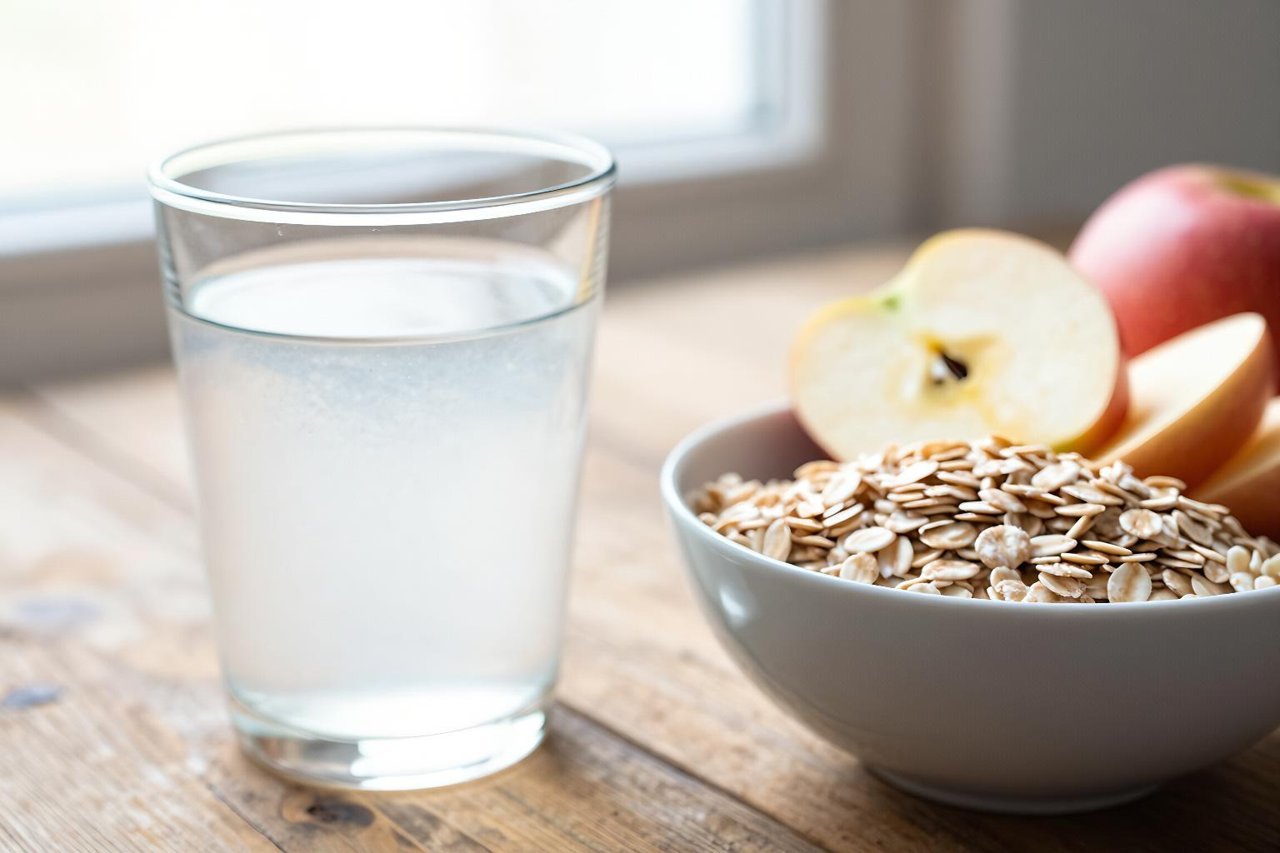
Two breakfasts, same calories. One is a bowl of instant oats with a spoon of jam. The other is steel-cut oats with psyllium, a handful of berries and a spoon of Greek yogurt. Most people can guess which one leaves them rummaging in the cupboard by 10:30am. The difference isn’t magic and it isn’t willpower — it’s largely the behaviour of soluble fiber as it turns into a gel in your stomach.
That gel effect is one of the more reliable appetite tools in nutrition, and it’s also one of the most oversold. Fiber supplements get marketed as if a capsule can replace a meal, and for some people a fast jump in fiber intake produces nothing but bloating and a hasty retreat. Here’s what the research actually supports, and where soluble fiber and satiety part ways.
What “soluble” really means once it’s inside you
Soluble fiber is a broad category of carbohydrates your small intestine can’t break down. The important distinction within that category is viscosity — how readily a fiber dissolves and thickens in water.
Psyllium husk, oat beta-glucan, pectin from apples and citrus, and guar gum all form thick gels. They physically slow the emptying of your stomach and the absorption of nutrients further down. Inulin and oligofructose, the chicory-root fibers in a lot of “prebiotic” products, dissolve but stay thin. They’re fermentable and feed gut bacteria, but they don’t coat the gut the way psyllium does. Both are soluble. Only one is reliably filling.
That distinction explains most of the confusing supplement reviews out there. Someone takes 8g of inulin, gets gas and no appetite change, and concludes fiber doesn’t work. Someone else takes 5g of psyllium in a glass of water before dinner and eats noticeably less.
Three ways soluble fiber reduces hunger
The gel slows the stomach tap
Viscous fiber mixes with water and food to form a thick mass that takes longer to leave the stomach. A fuller stomach for longer means fewer hunger pangs — plain mechanics. In a 2019 study of adults given psyllium before meals, participants reported lower hunger and ate less at the following meal compared with a low-fiber control.
Gut hormones get a longer conversation
When nutrients reach the lower small intestine slowly, L-cells in the gut lining release satiety hormones including GLP-1, PYY and CCK. The slower transit from viscous fiber extends that release. Fermentable fibers add a second route: bacteria produce short-chain fatty acids such as propionate and butyrate, which appear to influence appetite signalling as well. This is the same hormonal territory that modern weight-loss drugs target, just at a much gentler magnitude.
Volume and chewing buy you time
A high-fiber meal is usually a bulkier meal. You’re eating more food mass and more water for the same calories, and you’re chewing longer, which gives your body more time to register fullness. A 400-calorie portion of lentil soup is a very different physical experience from a 400-calorie croissant, even though the hormone response to the croissant isn’t zero.
Which fibers actually move the needle
Not all soluble fiber is worth your money. These have the best evidence for appetite control:
- Psyllium husk — the strongest performer in head-to-head trials. Roughly 5–10g mixed into 250ml of water, taken 20–30 minutes before a meal, consistently reduces intake at that meal. Start at 3g.
- Oat beta-glucan — 4g a day (about 80g of dry oats, or 60g of oat bran) lowers LDL cholesterol and improves fullness. Regular porridge, not oat-flavoured cereal bars.
- Pectin — found in apples, citrus peel and carrots. Less potent than psyllium gram for gram, but eating a whole apple 15 minutes before lunch measurably reduces lunch calories in several trials.
- Guar gum and konjac glucomannan — genuinely viscous, but the doses needed (often 3–5g) cause bloating in a fair share of people. Glucomannan capsules have decent satiety data, at the cost of tolerability.
- Legumes — a cup of lentils delivers around 6g of soluble fiber plus 18g of protein, and the combination outperforms either nutrient alone.
Inulin, resistant dextrin and most chicory-root prebiotics belong on a different list. Good for your gut bacteria, weak on hunger. Roughly 5g of inulin daily is a fine prebiotic dose; 20g in one sitting is a recipe for a bad afternoon.
Dose, timing and the details that decide whether it works
Three things separate people who get results from people who get cramps.
Ramp up slowly. Add 2–3g of a viscous fiber every four or five days rather than jumping straight to 15g. Your gut bacteria and motility adapt, and the gas settles within a week or two for most people.
Water is not optional. Soluble fiber needs liquid to form a gel. Taken dry or with a sip of water, psyllium will do the opposite of what you want and contribute to constipation. Aim for a full 250ml glass per dose and keep total daily fluid up.
Pair it with protein and volume. Soluble fiber on top of a small, low-protein meal is diminishing returns. Fiber, 25–30g of protein and something with water content — soup, fruit, vegetables — is the combination that carries fullness for four hours rather than ninety minutes.
The risks worth knowing about
Gas, bloating and cramping
Fermentable soluble fibers produce gas as bacteria break them down. For many people that’s mild and temporary. For a subset it’s genuinely unpleasant, and doubling the dose to “push through” makes it worse.
IBS and FODMAP sensitivity
Inulin, oligofructose, and the fibers in onions, garlic and legumes are rapidly fermented and can trigger significant symptoms in people with irritable bowel syndrome. Psyllium is usually the better tolerated option in IBS, which is one of the few areas where the evidence is fairly clear. If bloating is your main gut complaint, adding prebiotic fiber powder is likely to make it worse, not better.
Medication interactions
Viscous fiber can bind other substances in the gut. Psyllium in particular can reduce absorption of levothyroxine, lithium, some diabetes medication and certain antidepressants if taken at the same time. Leave at least two hours between a fiber supplement and any medication you take regularly, and check with a pharmacist if you’re on a narrow-therapeutic-index drug.
When fullness becomes a problem
Aggressive fiber intake can leave older adults or people with small appetites too full to eat enough protein and total calories. If you’re struggling to maintain weight, a 10g psyllium dose before every meal is working against you. The same applies to anyone with a history of disordered eating — appetite suppression is not a neutral tool.
The calorie math trap
Adding fiber to a diet that hasn’t otherwise changed rarely produces weight loss. A tablespoon of psyllium before dinner may shave 60–80 calories off that meal. If the rest of the day is unchanged, that’s a slow drift, not a transformation. Fiber is a supporting player alongside protein, sleep and total calorie intake.
Building a day around it
A workable pattern looks like this: oats or oat bran at breakfast with fruit (5–6g soluble fiber), a cup of lentil or bean soup or a salad with chickpeas at lunch (6–8g), and 5g of psyllium in water 25 minutes before your evening meal. Total intake lands around 15–20g of soluble fiber, comfortably inside the 25–30g of total daily fiber most guidelines suggest.
Give it two weeks before you judge it. The first few days of a new fiber habit are the least representative — that’s when the gas and the gut adjustment happen. By day ten, most people notice the more useful signal: they’re eating dinner because it’s dinner time, not because they’re starving. That shift in hunger timing, more than any number on a scale, is what soluble fiber realistically delivers.
