 1-800-656-4211




Blog
Mangosteen: What the Purple Fruit Tastes Like and How to Pick a Good One

What Exactly Is a Mangosteen?
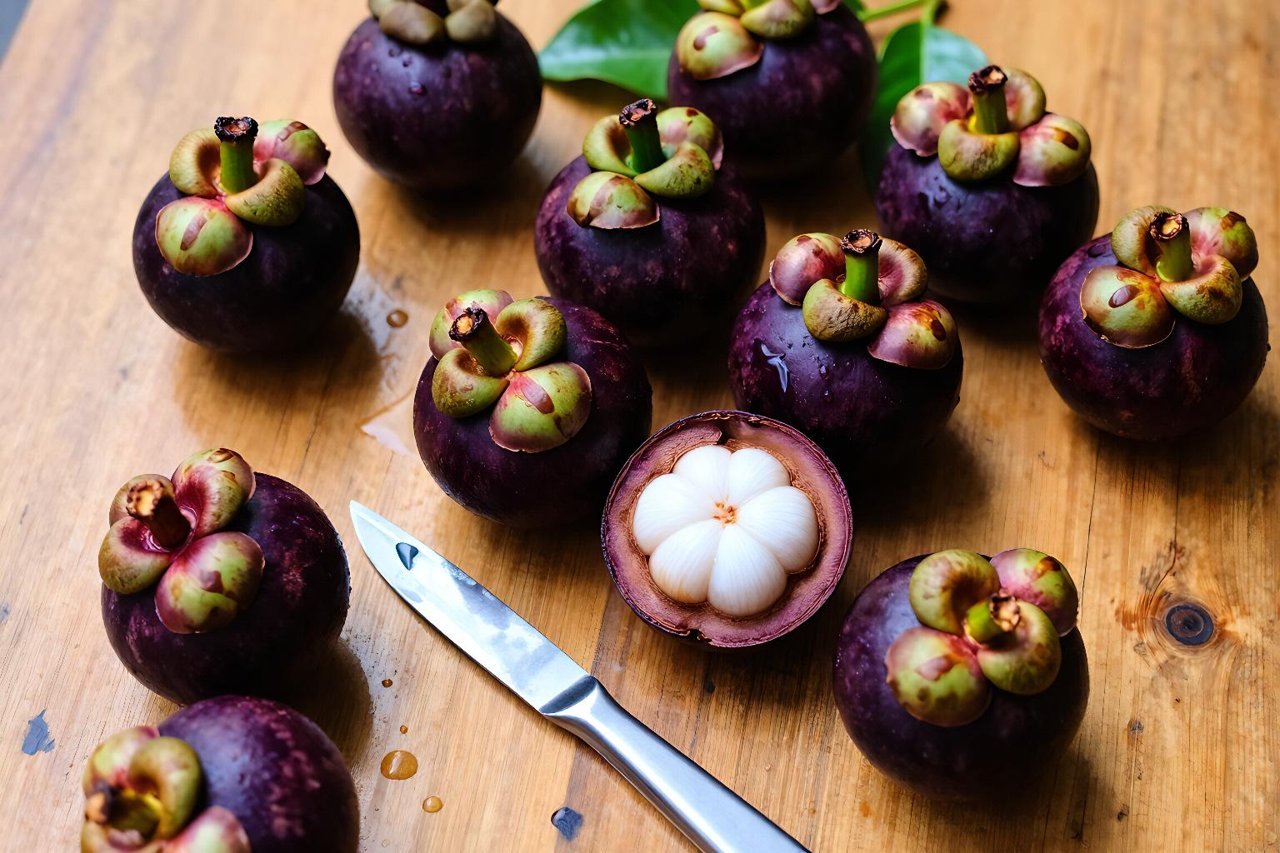
The name misleads almost everyone. Mangosteen is no relative of the mango. It comes from Garcinia mangostana, an evergreen tree native to the Malay Archipelago, and it grows into something closer to a small purple bowling ball than a stone fruit. Four to eight white segments sit packed inside a rind roughly a centimetre thick, each segment about the size of a plump garlic clove. One of them usually hides a small, bitter seed worth spitting out.
That thick rind is also why the fruit costs $10 or more a pound in Chicago or London. A seedling takes eight to ten years before it fruits, the trees need steady humidity and sulk below about 10°C, and they bruise easily in transit. Thailand, Vietnam, Indonesia and Malaysia grow nearly all of the commercial supply, which is why a ripe mangosteen in a Western supermarket is genuinely a small event.
What Mangosteen Tastes Like
Sweet, gently tart and unmistakably floral. Most people land on lychee and peach as the closest comparisons, with a pineapple-like edge underneath and a faint strawberry note in riper fruit. Acidity is low, and at roughly 16 grams of sugar per 100 grams of flesh it eats more like a dessert than a snack.
The texture is half the appeal
Good segments are creamy, closer to a ripe plum with the fibres stripped out than to a citrus wedge. They give way with almost no chew. Overripe fruit turns translucent and slippery, while underripe segments stay firm and slightly rubbery, so the difference between a great mangosteen and a mediocre one is often just two or three days on a market shelf.
How to Pick a Good One and Open It Cleanly
Ripe fruit is a deep, even purple, sometimes shading toward red-black, with fresh green leaves still attached at the stem. Squeeze it lightly: it should have a little give, like a tennis ball under low pressure. Not rock solid, not soft enough to dent. Heft matters too, since heavier fruit means juicier segments.
Skip anything with a dried-out crown, powdery white patches on the rind, or a hollow feel when tapped. Those signal age or cold damage, and the segments inside will be brown, glassy or rubbery.
Opening one takes about five seconds once you’ve done it a few times:
- Hold the fruit stem-side up and score a shallow line around its equator with a paring knife. Keep the blade shallow, because the segments sit close to the rind.
- Twist the two halves in opposite directions until they separate. The top half usually lifts away with the crown still attached.
- Eat the segments straight out of the bottom shell, with a fork or your fingers.
No knife handy? Press both thumbs into the equator and squeeze until the rind cracks, then pull it apart. Either way, know that the rind leaks a purple latex that stains fabric permanently. Wear an apron, keep it away from the white tablecloth, and rinse your hands before touching anything pale.
Mangosteen Nutrition Without the Hype
Per 100 grams of edible flesh you’re getting roughly 73 calories, 17 grams of carbohydrate and somewhere between 1.8 and 5 grams of fibre, depending on variety and how the fruit was measured. It’s a lovely fruit, not a nutritional knockout.
- Calories: about 73 per 100 g, comparable to a pear
- Vitamin C: roughly 3 to 7 mg per 100 g, a small fraction of an orange’s 53 mg
- Fibre: 1.8–5 g, mostly insoluble, which is the kind that helps keep things moving
- Potassium: modest, around 48 mg
- Sugar: 16–17 g, higher than most berries
Notice what isn’t on that list. Xanthones, the compounds mangosteen is famous for, barely show up in the flesh at all.
What the Xanthone Story Actually Gets Right
Mangosteen’s superfruit reputation rests on xanthones, a class of plant compounds that includes alpha-mangostin, beta-mangostin and garcinone E. Laboratory work shows genuine antioxidant, anti-inflammatory and antibacterial activity, and the rind has a long history of use in Southeast Asian traditional medicine.
Here’s the catch. The xanthones are concentrated in the rind, which is bitter, tannic and almost never eaten fresh. The white segments contain very little. Human research has focused mostly on commercial mangosteen juice blends, and it consists of small, short trials looking at blood markers rather than outcomes anyone would actually care about. That is a long way from proof that the fruit prevents or treats disease.
One practical warning is worth repeating: concentrated rind extracts in supplement form can interact with blood thinners and other medications, and a capsule is nothing like eating two fruits after dinner. Enjoy mangosteen as food. If you’re taking a supplement for a diagnosed condition, run it past a pharmacist first.
Beyond Eating It Raw
In Thailand the segments turn up in yam salads with lime, chilli, shallots and dried shrimp, where their sweetness balances the heat beautifully. They also make excellent sorbet and granita, since the flesh blends smooth with very little added liquid. A handful whizzed with coconut milk, ice and a squeeze of lime makes a decent smoothie, and the fruit pairs well with plain yoghurt, soft cheeses like brie, or a scoop of vanilla ice cream. Bottled mangosteen juice is widely sold across Southeast Asia, though commercial versions tend to be heavily sweetened. The rind itself gets dried and brewed as tea and used as a natural dye for textiles, which is a much better use for it than eating it.
Season, Buying and Storage
In Southeast Asia the season runs roughly April through October, peaking in May and June when prices fall and quality climbs. Fruit shipped to Europe and North America follows the Thai season, so late spring and summer are your best window. Smaller counter-seasons come from Puerto Rico, Guatemala, Honduras and Brazil, plus a modest Florida crop in early autumn. Buy from a market with fast turnover, and check the crown: green and supple beats brown and brittle every time.
Mangosteen is chill-sensitive. Stored below about 10°C it develops hard rind, a condition where the outside turns brittle and woody while the inside may still be perfectly fine. Leave it at room temperature for a day or two, or refrigerate it in a perforated plastic bag for up to a week. Beyond that, the segments start to ferment. If you’ve bought more than you can eat in that window, peel the arils and freeze them in a single layer; they thaw a little soft, but they’re ideal for smoothies and sorbet later on.
