 1-800-656-4211




Blog
Matcha Health Benefits: What a Daily Bowl Actually Does for You

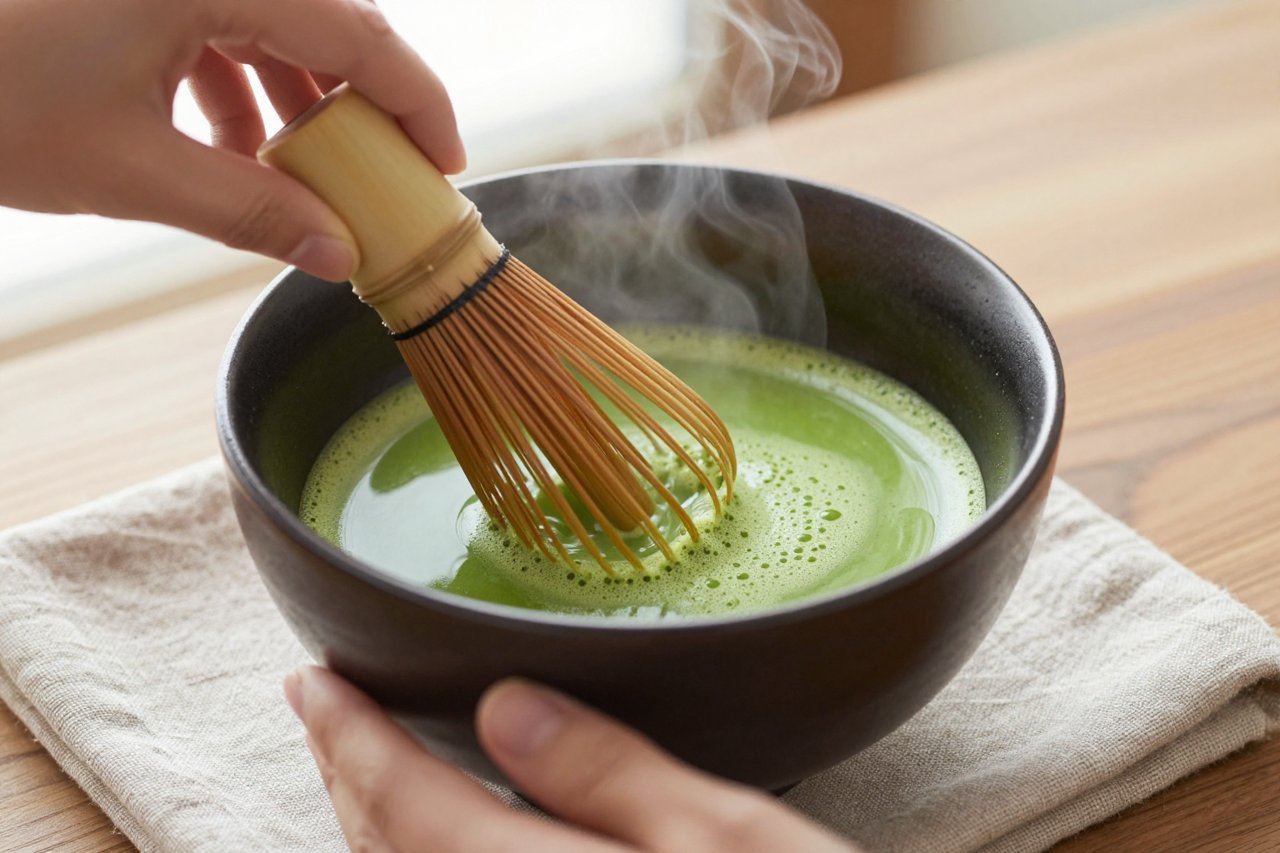
Matcha has a reputation problem. Half the internet treats it as a miracle powder that burns fat while you meditate; the other half dismisses it as overpriced green tea for people with too much time on their hands. The truth sits in the middle, and it’s more interesting than either camp admits.
What separates matcha from every other tea is simple: you drink the whole leaf. Not an infusion, not a steeped-and-discarded bag, but the entire leaf stone-ground into a powder fine enough to stay suspended in water. That single detail explains most of the matcha health benefits people talk about, and it’s also why a cheap culinary-grade latte doesn’t deliver the same thing as a properly whisked bowl.
Why matcha outperforms regular green tea
Steep a green tea bag for three minutes and you extract perhaps a fifth of what the leaf contains. The rest, including a good chunk of the catechins and caffeine, leaves the party with the teabag. Matcha skips that step entirely.
A single teaspoon, about two grams, delivers close to the full catechin load of the leaf. The most studied of those compounds is EGCG, and matcha’s EGCG content per cup runs far higher than a standard steeped green tea. That’s the mechanism doing the work.
Antioxidants: strong evidence, modest expectations
EGCG does impressive things in laboratory dishes. It neutralises free radicals, slows the oxidation of LDL cholesterol, and interferes with several pathways that cancer cells rely on. Human bodies are messier than petri dishes, and the human results are quieter.
What the research generally shows is a link between regular green tea consumption and lower rates of heart disease and stroke across large populations, plus modest improvements in cholesterol and inflammatory markers in controlled trials. Matcha concentrates the same compounds. Most of the direct evidence, though, comes from green tea as a whole rather than matcha on its own, which is worth knowing before you read another headline claiming it cures something.
The calm-alert feeling isn’t imaginary
A teaspoon of matcha carries roughly 60-70mg of caffeine, about two-thirds of an eight-ounce coffee. It also carries L-theanine, an amino acid that tea leaves are unusually rich in. Because you consume the whole leaf, a bowl of matcha delivers more of it than a brewed cup.
L-theanine crosses into the brain and nudges up alpha wave activity, the pattern associated with relaxed but wakeful attention. Paired with caffeine, it takes the edge off. The caffeine sharpens, the theanine smooths, and the result is a longer, flatter curve instead of coffee’s sharp spike and 11am slump. That combination is the foundation of the calm, focused energy matcha is known for.
How much you feel it depends on your baseline. Coming off three espressos a day, a bowl of matcha will register as almost nothing. Coming off no caffeine at all, it will feel substantial.
Focus, attention and the afternoon dip
L-theanine has been tested on its own for attention and reaction time. The trials are small, but the direction is consistent: improvements in sustained attention, quicker reactions, better performance on demanding cognitive tasks, particularly in older adults and in people who are already tired.
Nobody is claiming it turns you into a genius. The realistic version is that it removes some friction. Tasks that would normally have you reaching for your phone every four minutes stay tolerable for longer. For anyone whose income depends on concentrating, that’s the benefit that keeps them coming back.
Metabolism and body composition
Green tea catechins, with caffeine along for the ride, appear to nudge thermogenesis upward by roughly 3-4% in short-term studies. A few percent of your daily calorie burn is small. Stacked over a year of daily drinking it isn’t nothing, though it will never beat a decent night’s sleep or cutting fizzy drinks.
The more interesting data concerns fat distribution. Several controlled trials report small reductions in body fat percentage and waist circumference with regular catechin-and-caffeine intake. Waist measurements respond more than overall weight, which fits the idea that the effect is partly about how the body handles fat rather than how much energy you take in. For a fuller picture, what a daily bowl of matcha really does for your body is worth reading alongside this.
Blood sugar, cholesterol and blood pressure
Blood sugar
Drinking matcha with or shortly before a meal seems to blunt the post-meal glucose rise a little. The effect is modest and short-lived, but if your breakfast is usually toast or cereal, a bowl alongside it is a harmless upgrade.
Cholesterol
Meta-analyses of green tea trials show small reductions in total and LDL cholesterol, generally in the region of a few percent. Not dramatic, and not a replacement for anything your doctor prescribes, but consistent across studies.
Blood pressure
Expect a drop of around 1-3 mmHg with habitual green tea drinking. Individually that’s close to meaningless. Across a whole population, it’s the kind of shift that moves stroke statistics.
Liver, teeth and skin
The liver findings are some of the more intriguing ones. In trials involving people with non-alcoholic fatty liver disease, green tea catechins were associated with improvements in liver enzyme levels. The tooth story is more straightforward: catechins show antimicrobial activity against oral bacteria, which turns up as less bad breath and possibly less plaque.
Skin research is thinner, and most of it uses topical green tea rather than the drink. It’s a reasonable bonus, not a reason on its own.
How much matcha is actually worth drinking
One to two teaspoons a day, roughly 2-4 grams, is where most of the useful research sits. Going beyond that doesn’t seem to add much, and there’s a real caveat at the top end: concentrated green tea extract supplements have been linked to liver injury in a small number of cases. Brewed matcha isn’t the same thing, and sticking to the drink sidesteps the issue.
A few practical limits matter, since the doses studied in matcha’s antioxidant and metabolism benefits come with real-world caveats:
- Caffeine sensitivity. 60-70mg per teaspoon adds up quickly. If you’re prone to anxiety or sleep trouble, keep your last bowl before early afternoon.
- Iron absorption. Tannins in tea reduce how much iron you take from food. If you’re anaemic or vegetarian, leave an hour either side of iron-rich meals.
- Pregnancy. Matcha counts toward your daily caffeine total. Most guidance caps that at 200mg, roughly three teaspoons spread across a day.
Buying and preparing it so the benefits actually land
Grade matters more than brand. Ceremonial-grade matcha comes from the first harvest, with leaves shaded for weeks before picking, which boosts both chlorophyll and L-theanine. Culinary grade is cheaper, sharper and bitter, and it’s fine in a smoothie where banana and honey do the heavy lifting. Drink it straight and you’ll notice the difference immediately.
- Colour is your best test. Fresh matcha is bright jade green. Olive or khaki means it’s old or badly stored.
- Buy small tins. Matcha oxidises within weeks of opening. A 30g tin you finish in a month beats a 100g bag that lasts a year.
- Store it cold and dark. Airtight, in the fridge, away from strong-smelling food. Let the tin reach room temperature before opening to avoid condensation.
- Sift the powder. A quick pass through a fine sieve prevents the clumps that no amount of whisking will fix.
- Water at 70-80°C. Boiling water scorches the leaf and turns it aggressively bitter.
- Whisk in a zigzag or W motion for 15-20 seconds, until a fine foam sits on the surface.
The habit side is where most people quietly fail. A bowl once a fortnight won’t do much, and the studies showing benefits involved daily drinking over weeks and months. That’s the long-term case for keeping a tin in the cupboard rather than treating matcha as an occasional treat. Pick a slot in your day, mid-morning or after lunch suits most people, and let it become something you do without deciding. Two grams of powder, hot water, thirty seconds of whisking. Small enough to actually stick.
