 1-800-656-4211




Blog
Matcha Benefits: What a Daily Bowl Really Does for Your Body

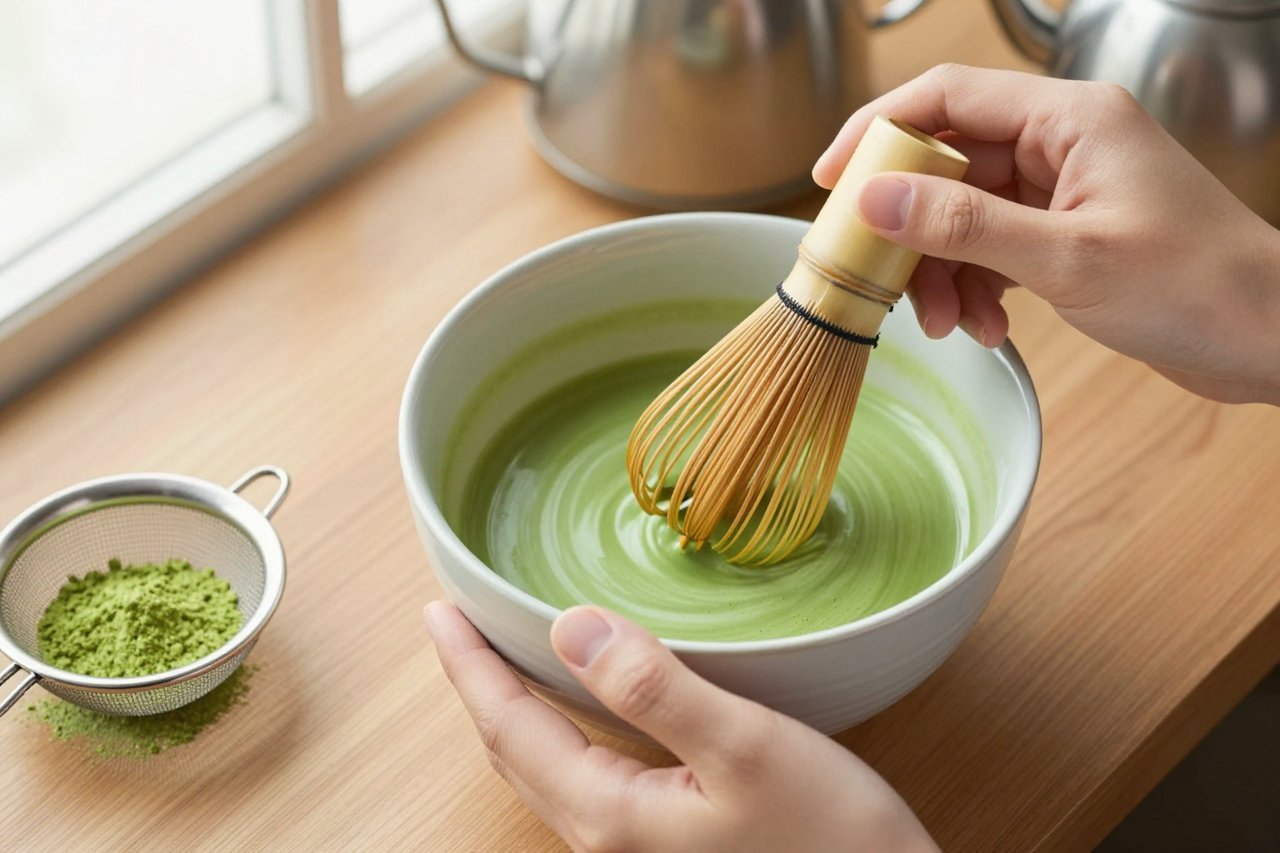
Matcha has travelled from Japanese tea rooms to the centre of every café menu, and the health claims have arrived with it. One bowl is supposedly a detox, a metabolism kick-starter, and a meditation session rolled into a single whisk. Some of that survives contact with the research. A fair amount doesn’t.
What makes matcha genuinely worth paying attention to is how it’s made. Instead of steeping leaves and throwing them away, you whisk stone-ground powder into water and drink the whole leaf. That one detail changes the numbers on everything else.
What You’re Actually Drinking
A standard serving of matcha is about one gram, roughly half a level teaspoon, or two grams if you like a stronger bowl. That gram delivers somewhere between 30 and 40 milligrams of caffeine, a similar amount of L-theanine, and a broad spread of catechins, the plant compounds behind most of the health talk.
Shade growing changes the chemistry
Three to four weeks before harvest, matcha fields are covered with screens that block most sunlight. Starved of light, the plant pumps energy into chlorophyll (hence the electric green colour) and produces more L-theanine and caffeine. The result is a leaf with a different chemical profile from the green tea in your average teabag.
It’s stronger than steeped green tea, though not by magic
Because you consume the entire leaf, a bowl of matcha gives you more catechins and caffeine per serving than an infusion of the same leaves. One much-quoted 2003 study found that matcha powder delivered far more of the antioxidant EGCG than regular brewed green tea. The gap is real. The claim that a single bowl equals ten cups of green tea is marketing, not science.
Calm Energy Without the Crash
This is the benefit most people notice first, and it has a clear mechanism. L-theanine is an amino acid that crosses into the brain and promotes a relaxed but alert state. When it arrives alongside caffeine, it softens the sharp edges. You get the lift without the jaw-clenching, and the drop-off a few hours later tends to be gentler.
Because you’re swallowing the ground leaf rather than drinking a fast infusion, the caffeine releases more gradually. Most people who feel jittery on coffee can manage one or two bowls of matcha without that wired, buzzing sensation. If you’re sensitive to caffeine, start with half a teaspoon and see how you feel.
The Antioxidant Story, Minus the Hype
Matcha is loaded with polyphenols, particularly a catechin called EGCG. These compounds mop up free radicals in laboratory settings, which is why matcha gets labelled a superfood. Human bodies are messier than petri dishes. Eating antioxidant-rich food appears to be good for you, but swallowing a bowl of green powder doesn’t cancel out a poor diet or a sedentary week.
Think of it as a small, consistent deposit rather than a grand gesture. A daily bowl of matcha is a modest upgrade to an already reasonable diet.
Focus, Memory, and Mood
Several small trials have paired L-theanine with caffeine and measured improvements in attention and reaction time. The effect sizes aren’t dramatic, and most studies use isolated supplements rather than matcha itself. Still, the direction is consistent: people who take the combination perform slightly better on tasks requiring sustained focus than people who take caffeine alone.
There’s also something to be said for the ritual. Sifting the powder, heating water to the right temperature, whisking until a fine foam forms. Ten minutes of deliberate, quiet activity before work is not a clinical intervention, but it does more for your morning than gulping a drink at a traffic light.
Heart and Metabolic Effects
Green tea catechins have been studied for cholesterol, blood pressure, and weight. Meta-analyses generally find small improvements in LDL cholesterol, in the region of a few milligrams per decilitre, and modest reductions in blood pressure. Weight loss results are the weakest link. Trials combining green tea catechins with caffeine typically show around one kilogram of extra loss over three months, which is real but hardly a transformation.
Matcha can be part of a heart-friendly routine. It cannot replace one.
Where Matcha Punches Above Its Weight
Liver markers
Some trials of green tea catechins have shown improvements in liver enzymes in people with fatty liver disease. The evidence isn’t strong enough to call matcha a treatment, but the signal is interesting, and it’s an active area of research.
Oral health
Catechins appear to interfere with the bacteria that cause plaque and bad breath. A matcha habit won’t replace flossing, but it’s a pleasant addition to a decent oral care routine.
Blood sugar response
Small studies suggest green tea compounds may blunt post-meal blood sugar spikes slightly. Matcha with a meal is a reasonable choice. Matcha in place of a balanced meal is not.
How to Get the Good Stuff Out of the Powder
Technique matters more than people expect. Boiling water makes matcha bitter and destroys some of the delicate compounds. A few practical rules:
- Water temperature: 70 to 80°C. Boil the kettle, then let it sit for two or three minutes.
- Sift first: Push the powder through a small sieve to break up clumps. Lumpy matcha never whisked smooth is a drink nobody enjoys.
- Dosage: One gram (half a teaspoon) for a light bowl, two grams for a proper one. More than that gets bitter fast.
- Grade: Ceremonial grade is for drinking plain. Culinary grade is cheaper, stronger in flavour, and better for lattes, smoothies, and baking.
- Storage: Keep it sealed, dark, and cold. Matcha fades to dull olive within weeks of air exposure.
Who Should Be Careful
Matcha isn’t right for everyone at every stage. Catechins bind to iron and reduce absorption of the non-heme iron in plants, so if you’re anaemic or vegetarian and rely on lentils and spinach, leave a couple of hours between matcha and your iron-rich meals. Pregnant women should keep an eye on total caffeine, since two strong bowls can approach a third of the daily recommended limit.
Green tea extract supplements are a different animal entirely. Concentrated capsules have been linked to rare cases of liver injury at doses far above anything you’d drink. A bowl of whisked tea is not the same as a pill containing 500 milligrams of EGCG.
Building a Habit That Actually Sticks
The people who get lasting value from matcha tend to be unromantic about it. They buy one decent tin of ceremonial grade and one bag of culinary grade, keep a small whisk and a sieve by the kettle, and drink it most mornings instead of a second coffee. Some swap an afternoon coffee for a bowl and find they sleep better for it.
You don’t need a bamboo whisk or a handmade bowl to start. A fine sieve, a small balloon whisk, and water that’s just off the boil will get you 90% of the way there. Add it to a smoothie with banana and spinach, or whisk it into hot oat milk with a spoon of honey when you want something sweeter.
Start with half a teaspoon tomorrow morning and pay attention to how the next two hours feel. If you’re focused and steady rather than wired, you’ve found your dose. If your stomach complains or you feel agitated, cut back or move it earlier in the day. Matcha rewards a little experimentation and steady, boring consistency far more than any dramatic cleanse or three-day reset.
