 1-800-656-4211




Blog
Dragon Fruit: What It Tastes Like, What It Does, and How to Pick a Good One

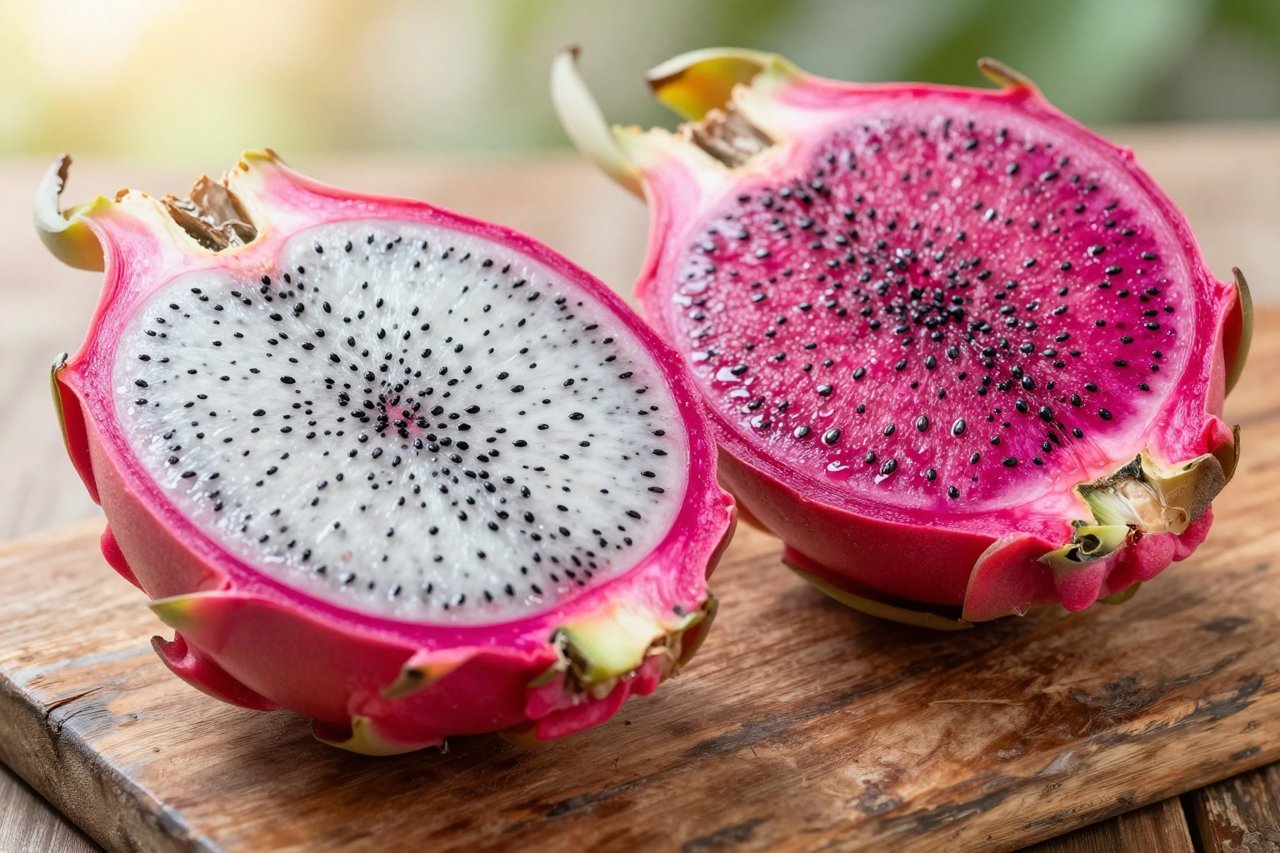
Dragon fruit stops people in the produce aisle. Pink leathery skin, green-tipped scales, and a name that sounds like it belongs on a fantasy novel cover. It also tends to cost three or four times what a mango does, which raises a fair question: is there anything behind the look, or are you paying for a fruit that photographs well?
Short answer: there is real nutrition inside, but it isn’t the miracle food the internet sometimes makes it out to be. Here’s what dragon fruit actually is, what it does in your body, and how to pick one that doesn’t taste like damp cucumber.
What Dragon Fruit Actually Is
Dragon fruit, also called pitaya or pitahaya, grows on a climbing cactus native to Mexico and Central America, where it has fruited on rocks and tree trunks for centuries. Commercial farming spread to Vietnam, Thailand, Colombia, Ecuador, Israel, and parts of Florida and northern Australia. Vietnam dominates the export market, which is why a tropical fruit turns up in European and North American supermarkets in the middle of January.
The three types you’ll find in shops
- Red skin, white flesh. The common one. Mild, lightly sweet, with a texture sitting somewhere between kiwi and watermelon. Cheapest and easiest to find.
- Red skin, red flesh. Sweeter and more complex, loaded with betacyanin pigment. This is the one that stains your fingers, your chopping board, and anything white within reach.
- Yellow skin, white flesh. The sweetest of the three, smaller, usually pricier, and often sold as yellow pitaya.
All three grow on the same sprawling cactus, and all three carry tiny black seeds you eat without noticing.
What’s Actually Inside a Dragon Fruit
Numbers shift with variety and ripeness, but per 100 g you’re looking at roughly:
- 60 calories and about 85% water
- 2.5–3 g of fibre, mostly the soluble kind
- Around 40 mg of magnesium
- Small amounts of iron, calcium, and vitamin C
- Betalains and betacyanins, the pigments behind the red flesh
Portion size matters more than most people expect. A medium fruit weighs 200–300 g, so eating a whole one lands closer to 150 calories than 60. Still light, but not free food. Soluble fibre like this is worth understanding properly, and an explainer on the different types of soluble fiber and how to choose one covers why it behaves so differently from the roughage in a bowl of bran.
The Benefits That Actually Hold Up
The internet has inflated dragon fruit’s reputation considerably. Claims that it rebuilds joints, reverses ageing, or flushes toxins out of your system don’t survive a look at the evidence. What does hold up is more modest and more useful. There’s a longer rundown in 15 dragon fruit benefits very few people know if you want the full list, but the core comes down to three things.
Fibre, blood sugar, and a slower release of glucose
Roughly 3 g of soluble fibre per 100 g isn’t dramatic, but it does something practical: it slows how quickly the fruit’s sugar reaches your bloodstream. Dragon fruit carries a low glycemic load (a whole one has about 11–13 g of carbohydrate), which makes it a sensible choice for anyone watching their blood sugar. Pair it with yoghurt or a handful of almonds and the effect gets stronger. The benefits of dragon fruit for blood sugar and digestion go deeper into what that fibre is doing once it arrives.
Digestion and regularity
Those tiny black seeds aren’t decoration. They carry a little fat and add bulk, while the soluble fibre feeds gut bacteria that produce short-chain fatty acids. One fruit delivers around 6 g of fibre, roughly a fifth of what most adults manage in an entire day. Whole fruit is the better route to that target, though it helps to know which fiber supplements for constipation that actually work are worth keeping on the shelf for the weeks when fruit alone isn’t cutting it.
Skin, antioxidants, and the red pigment
Red-fleshed varieties carry betacyanins, the same family of pigments that give beetroot its colour, which is a big part of why red pitaya shows up in so many smoothie bowls. Vitamin C content is modest, a few milligrams per 100 g in the white varieties and more in the red, so don’t treat it as a citrus replacement. If skin is your actual goal, this piece on collagen supplementation for skin separates what’s supported by evidence from what’s marketing.
How to Pick One That’s Actually Ripe
Most supermarket dragon fruit is picked slightly underripe so it survives shipping, which is why so many people’s first taste is disappointing. A few cues help:
- Colour. Deep pink or magenta skin with green tips. Brown, shrivelled tips mean it’s old.
- Give. Press gently with your thumb. It should yield like a ripe kiwi: a little soft, never mushy.
- Weight. Heavier fruit holds more water and tastes juicier.
- Flower end. Check the base for mould or soft brown patches and put it back if you find any.
Left at room temperature, an underripe fruit softens over two or three days. Once it’s ready, the fridge buys you about four more.
How to Cut It Without Making a Mess
Slice off both ends, run a knife down the length of the skin (just through the rind, not the flesh), and peel it back like a jacket. Or halve it lengthwise and scoop the flesh out with a spoon. Either way, cube it and eat it cold. Chilling brings the sweetness forward noticeably, and a warm dragon fruit tastes flat.
The flavour is gentle. Expect something between kiwi, pear, and watermelon, with the yellow variety leaning sweeter and more floral. The seeds are edible and faintly crunchy. Red-fleshed fruit will dye your hands and your chopping board, so work on glass or plastic rather than pale wood, and don’t wear white.
Where It Works in the Kitchen
Dragon fruit’s mildness is a strength in some places and a weakness in others. It vanishes inside a smoothie with strong berries, but it shines alongside lime, mint, coconut, mango, and passion fruit. A few things it does well:
- Blended frozen with a squeeze of lime for sorbet
- Cubed over yoghurt or overnight oats
- Diced into a salsa with red onion, chilli, and coriander
- Muddled into sparkling water or iced tea
- Frozen into ice pops during a heatwave
Don’t cook it. Heat turns the flesh to mush and dulls the colour within seconds.
Growing One at Home
Dragon fruit is a cactus, which surprises people who assume it needs jungle humidity. It’s happiest in USDA zones 10 and 11, or in a large pot you can move under cover for winter. Give it a sturdy post or trellis, because the plant climbs and can sprawl six metres if you let it. It wants sharp drainage, full sun, and very little water.
The flowers open for a single night, enormous and white, and if you miss them you miss the whole show. Many varieties need cross-pollination, so going out with a soft brush in the evening and moving pollen between blooms raises your yield considerably. Expect the first fruit 18 months to two years after planting, and go easy on the watering. Root rot is the usual way these plants die.
What It Won’t Do, and Who Should Be Careful
Dragon fruit is a good fruit. It is not a cure. It won’t detoxify your liver, rebuild cartilage, or stand in for a balanced diet, and no single food can. As a low-calorie, hydrating, fibre-carrying snack it earns its place, though if you’re buying it purely for nutrition, a punnet of berries and a pear cover similar ground for less money. Buy it because you enjoy eating it.
A few practical cautions worth knowing. Red-fleshed fruit can turn urine and stool pink for a day, which alarms people who aren’t expecting it. It’s harmless. At small servings of around 100 g it’s low-FODMAP, but larger portions can cause bloating in people with IBS, so start small and see how you go. True allergy is rare but has been reported, mostly in people sensitive to other cactus fruits. And if you take blood sugar medication, the fibre is a helpful addition, not a reason to skip your usual monitoring.
