 1-800-656-4211




Blog
Black Seed Oil Benefits: What the Research Really Shows (and What It Doesn’t)

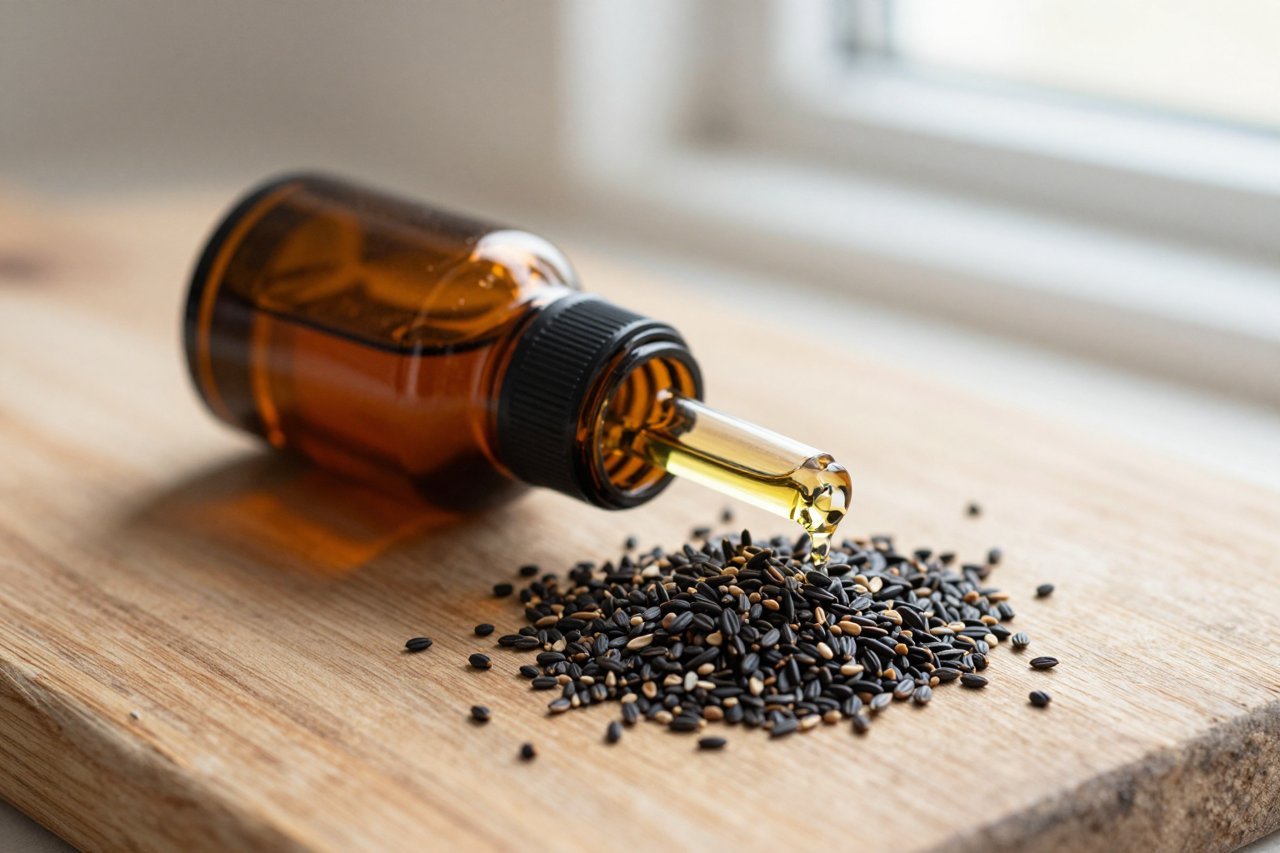
People have been pressing oil from tiny black seeds for at least two thousand years, long before anyone had a word for “antioxidant.” The seeds come from Nigella sativa, a small flowering plant grown across the Middle East, North Africa and South Asia, and the oil has picked up plenty of nicknames along the way: black cumin, blessed seed, kalonji. Your grandmother may have kept a bottle in the kitchen cupboard next to the honey.
Labs have since caught up with the folklore. Researchers have isolated dozens of active compounds in the oil, and one of them, thymoquinone, now appears in well over a thousand published studies. That’s genuinely interesting, but it doesn’t make black seed oil a cure-all. Some traditional claims hold up under scrutiny. Others are still mostly educated guesswork. Below is a straight look at which black seed oil benefits have evidence behind them, how people actually use it, and the handful of situations where you should leave the bottle on the shelf.
The Seed Behind the Reputation
Cold-pressed black seed oil is roughly 30 to 40 percent fixed oils, mostly linoleic and oleic acid, plus a small but potent fraction of volatile compounds. Thymoquinone gets the headlines. Supporting it are thymohydroquinone, thymol, carvacrol and p-cymene, which together behave as antioxidants and anti-inflammatories in laboratory and animal studies.
The liquid itself is dark amber, faintly bitter, and smells a little like oregano and pepper had an argument. If yours tastes bland and pale, you probably bought the wrong thing. Check the label for the botanical name Nigella sativa, because “black cumin” is sometimes used for a completely different plant, and nigella is easy to confuse with onion seed at a glance.
Black Seed Oil Benefits With Real Evidence Behind Them
Joint pain and stubborn inflammation
Chronic low-grade inflammation sits underneath a surprising number of everyday complaints, from creaky knees to stubborn skin. This is where black seed oil looks most promising. In one trial of women with rheumatoid arthritis, 500 mg taken twice daily for a month reduced disease activity scores and markers like C-reactive protein. A separate study in knee osteoarthritis found that a topical black seed gel took the edge off pain scores.
Both studies were small and short, so treat them as signals rather than proof. Still, if you’re looking for a low-risk add-on to whatever your doctor already has you doing, this is a reasonable place to start.
Skin, acne and barrier repair
Thymoquinone has demonstrated antibacterial activity against Cutibacterium acnes, the bacterium involved in most acne. A small trial using a 10 percent black seed lotion on mild to moderate acne reported a dramatic drop in lesion counts after two months. Eczema-prone skin also tends to tolerate the oil well, since its high linoleic acid content helps replace lipids the skin barrier is missing.
For hair, the honest answer is that most of the enthusiasm comes from animal studies and anecdote. People massage it into the scalp for thinning, and it won’t hurt, but don’t expect a transplant. Patch-test on your inner forearm first if your skin runs sensitive.
Asthma, allergies and easier breathing
A string of small trials in adults with asthma has found lower symptom scores and less reliance on rescue inhalers among people taking black seed preparations. Researchers put this down to the oil’s antihistamine-like and bronchodilator effects, observed in both boiled seed extracts and standardised capsules. If you have asthma, this is a conversation to have with your doctor rather than a reason to swap out your inhaler.
Blood sugar and cholesterol
Two grams of black seed oil daily for twelve weeks has been shown in randomised trials to lower fasting blood glucose, HbA1c and LDL cholesterol in adults with type 2 diabetes, with some studies also reporting a modest rise in HDL. The effects were real but not dramatic, and nowhere near what a prescribed medication can do. Think of it as a supporting player, and keep monitoring your numbers if you take glucose-lowering drugs.
Germs, ulcers and gut trouble
Laboratory work shows the oil inhibits Staphylococcus aureus, E. coli and Candida albicans. More practically, a small trial combined ground black seeds with omeprazole for two weeks and cleared H. pylori in roughly half the participants, a better result than the drug alone. Anyone with reflux or a sensitive stomach should introduce it slowly, because the oil can cut both ways.
Does Black Seed Oil Help With Weight?
This is the claim you’ll see plastered across social media, and the evidence is thinner than the marketing suggests. A few small trials have noted reduced appetite, lower waist circumference and slight improvements in body composition among people taking the oil, but the changes were modest and the studies short.
Nobody serious calls it a fat burner. What it can do is slot into a routine that’s already working. If you’re reining in portion sizes and grazing on healthy snacks that actually keep hunger quiet, black seed oil won’t undo that effort. It won’t replace it either, so don’t skip breakfast and hope a teaspoon fixes it.
How to Take It Without Regretting It
There’s no official dosage, which is why you’ll see wildly different numbers online. What the trials tend to use:
- The oil: one teaspoon (about 5 ml) once or twice a day, taken with food
- Capsules: 500 mg to 1 g, once or twice daily, easier if you can’t stand the taste
- Whole seeds: a teaspoon sprinkled over yogurt, bread or salads, chewed well
A few practical rules make the whole thing more pleasant. Start at half a teaspoon for the first week and build up. Take it with a meal to blunt any reflux. Never cook with it, since heat destroys much of the thymoquinone you’re paying for, and never swallow it lying down. If you’d rather have the full breakdown of doses by condition, this dose-by-dose guide to black seed oil covers the specifics.
Who Should Skip It
Black seed oil is well tolerated by most people, but the side effects that do show up are usually digestive: nausea, bloating, loose stools or a bit of heartburn. Rashes happen occasionally with topical use.
Some situations call for caution rather than common sense:
- Pregnancy. It may stimulate uterine contractions, so avoid it in all forms.
- Blood thinners and antiplatelet drugs. The oil can add to their effect.
- Surgery. Stop two weeks beforehand.
- Low blood pressure or blood-pressure medication. It can push readings lower.
- Diabetes medication. Monitor your levels, since the effect stacks.
What Separates a Good Bottle From a Bad One
Most of the disappointing results people report trace back to a disappointing product. Three things matter more than price or packaging. First, it should say cold-pressed, because solvent extraction strips out the volatile compounds. Second, it should come in dark glass, since light degrades the oil quickly. Third, it should list Nigella sativa as the only ingredient, with a harvest date or expiry rather than a vague best-before.
If a bottle is pale yellow and smells of nothing, you’ve bought cooking oil with a fancy label. A quality 100 ml bottle runs somewhere in the region of fifteen to thirty dollars, and a properly sealed one keeps for around a year in a cool cupboard, or longer in the fridge.
What a Realistic First Month Looks Like
Set expectations before you start, because this isn’t the kind of thing that announces itself on day one.
Week one is mostly about tolerance. You’ll notice the taste, maybe a little burping, and your digestion settling in. Weeks two to four are when people with joint complaints often report they’re moving a bit more comfortably, though plenty of people notice nothing at all. If you’re taking it for blood sugar or cholesterol, that’s a three-month project measured by a blood test, not by how you feel.
Give it eight to twelve weeks of consistent use before you decide. Take a photo of the bottle next to your calendar so you actually remember when you started, and jot down what you were hoping to fix. If nothing has changed by the three-month mark, save your money. Black seed oil is a useful tool with a decent evidence base, but it isn’t magic, and the people who get the most from it are the ones who pair it with decent sleep, real food and movement they enjoy.
